Tungstool · Slitting saws · Fine pitch · DIN 1837
Fine-Pitch Solid Carbide Slitting Saws
The general-purpose blade: plenty of teeth, a clean wall, and enough stiffness for everyday slotting.
15–120 mm · 24–128 teeth · 0.10–6.00 mm thick · DIN 1837
01 — Overview
What a Fine-Pitch Slitting Saw Is For
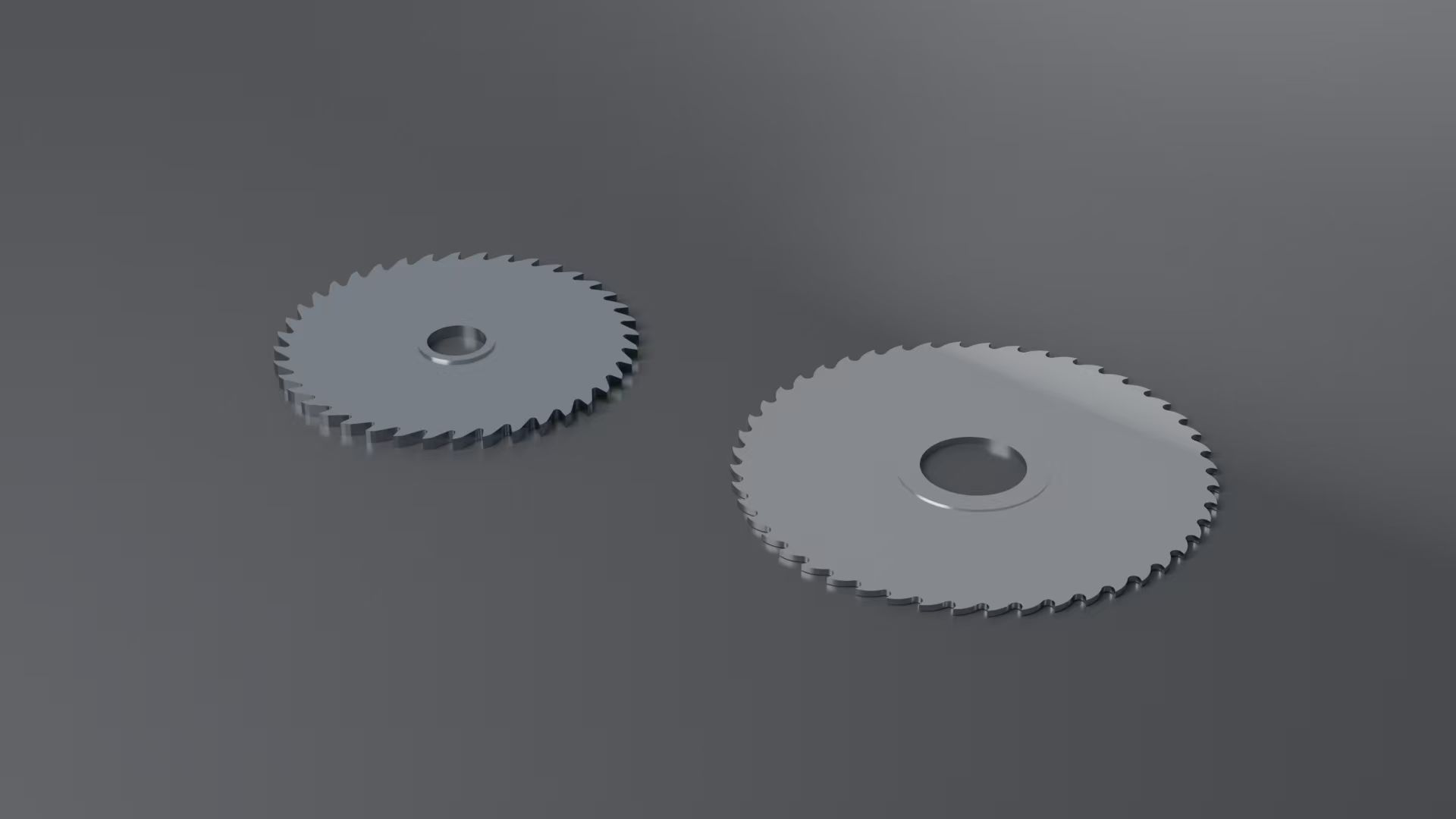
Fine pitch means more teeth per inch of circumference. Each tooth takes a small bite, the load spreads across two or three teeth at once, and the wall of the slot comes out straight with little burr. That is what makes this the default blade for keyways, retaining-ring grooves, screw-head slots and short cut-offs.
The limit is chip room. Once the slot gets deeper than roughly a third of the blade diameter, the gullets fill faster than the teeth can clear them and the blade starts to rub. That is the point where the coarse pitch earns its place — not because it is more accurate, but because it can carry the chips away.
02 — Specifications
Dimensions and Tolerances
Held to DIN 1837 where the standard applies; dimensional inspection reports are available with your order.
| Family | D1 · mm | Bore H7 · mm | Thickness · mm | Teeth | Feed / tooth |
|---|---|---|---|---|---|
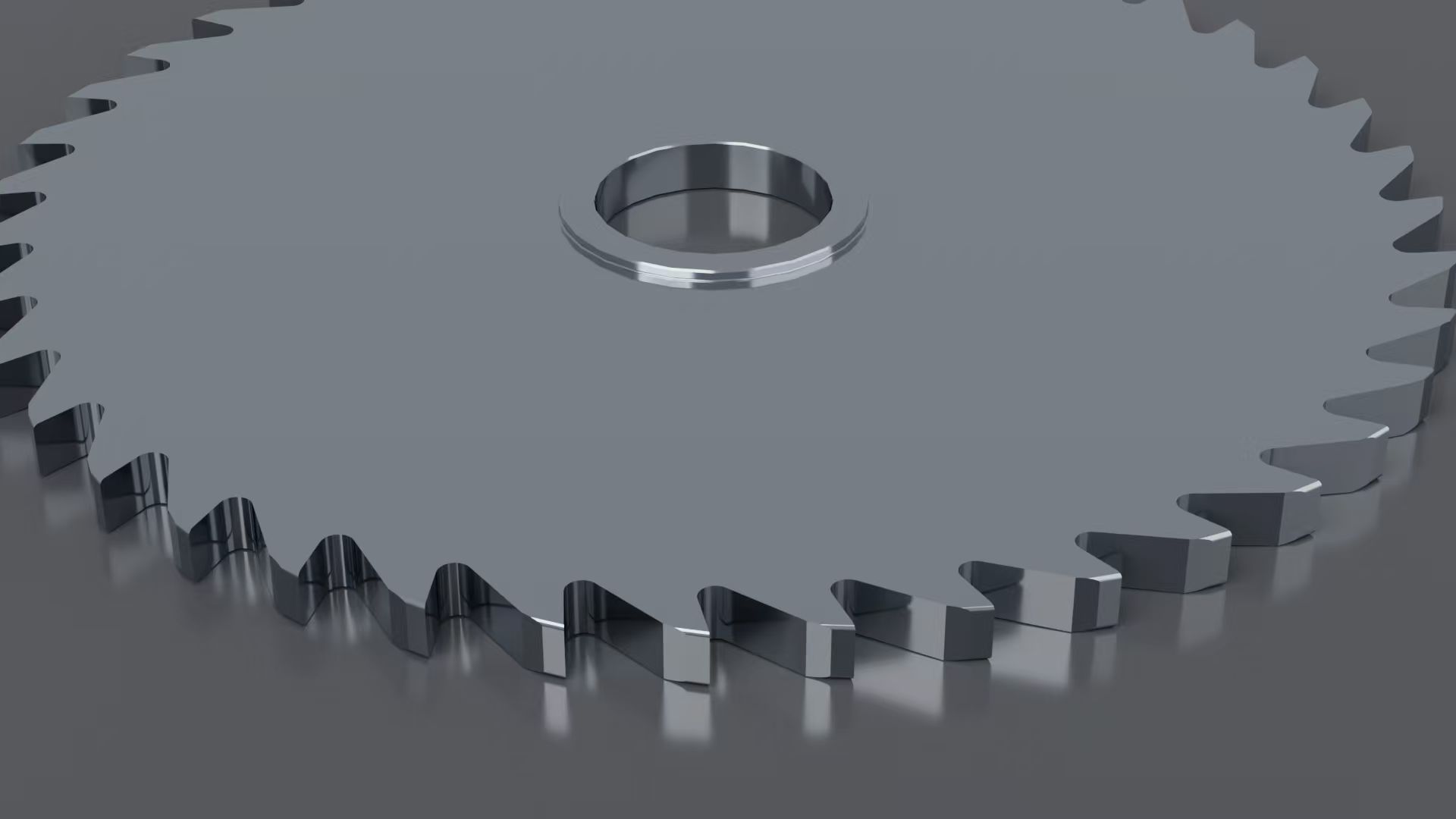
| Fine Tooth (DIN 1837) | 15–120 | 5–32 | 0.10–6.00 ±0.01 | 24–128 | 0.005–0.05 mm |
If you need a size that is not in the table, talk to us. We grind special diameters, bores and thicknesses to your drawing, and we will tell you straight away whether the geometry is practical.
03 — Cutting data
Cutting Data: Speeds and Feeds
Start at the low end of the speed range and raise it until the chip looks right and the blade sounds steady. With TiN, TiCN or TiAlN coatings, add about 20% to the cutting speed.
| Material | Group | Vc · m/min | Feed / tooth | Coolant |
|---|---|---|---|---|
| Free-cutting steel | P | 120–240 | 0.005–0.05 mm | Oil or emulsion |
| Alloy steel, by hardness | P | 40–200 | 0.005–0.05 mm | Oil or emulsion |
| Cast iron | K | 60–120 | 0.005–0.05 mm | Dry, air blast or emulsion |
| Aluminium, Si < 12% | N | 150–600 | 0.005–0.05 mm | Dry or air |
| Brass, copper, bronze | N | 80–300 | 0.005–0.05 mm | Dry, air or emulsion |
| Thermoplastics | N | 200–700 | 0.005–0.05 mm | Dry |
04 — Applications
Applications and Typical Parts
Keyways and shaft slots
Short slots in steel and cast iron shafts, where the wall has to stay parallel.
Retaining-ring and circlip grooves
Shallow grooves that stop at a shoulder, cut in one pass.
Screw-head slots
Small-diameter blades in automatic screw machines, cutting hundreds of identical slots.
Short cut-offs
Thin-wall tube and small bar where a full parting cycle is not worth setting up.
Choose the coarse pitch instead when the slot runs deeper than about a third of the blade diameter, or when the cut is long enough that chips have to travel. Choose the extra-fine pitch when the part is thin-walled or cannot take the cutting force.
05 — INOX tooth form
INOX Tooth Form: The Stainless Variant
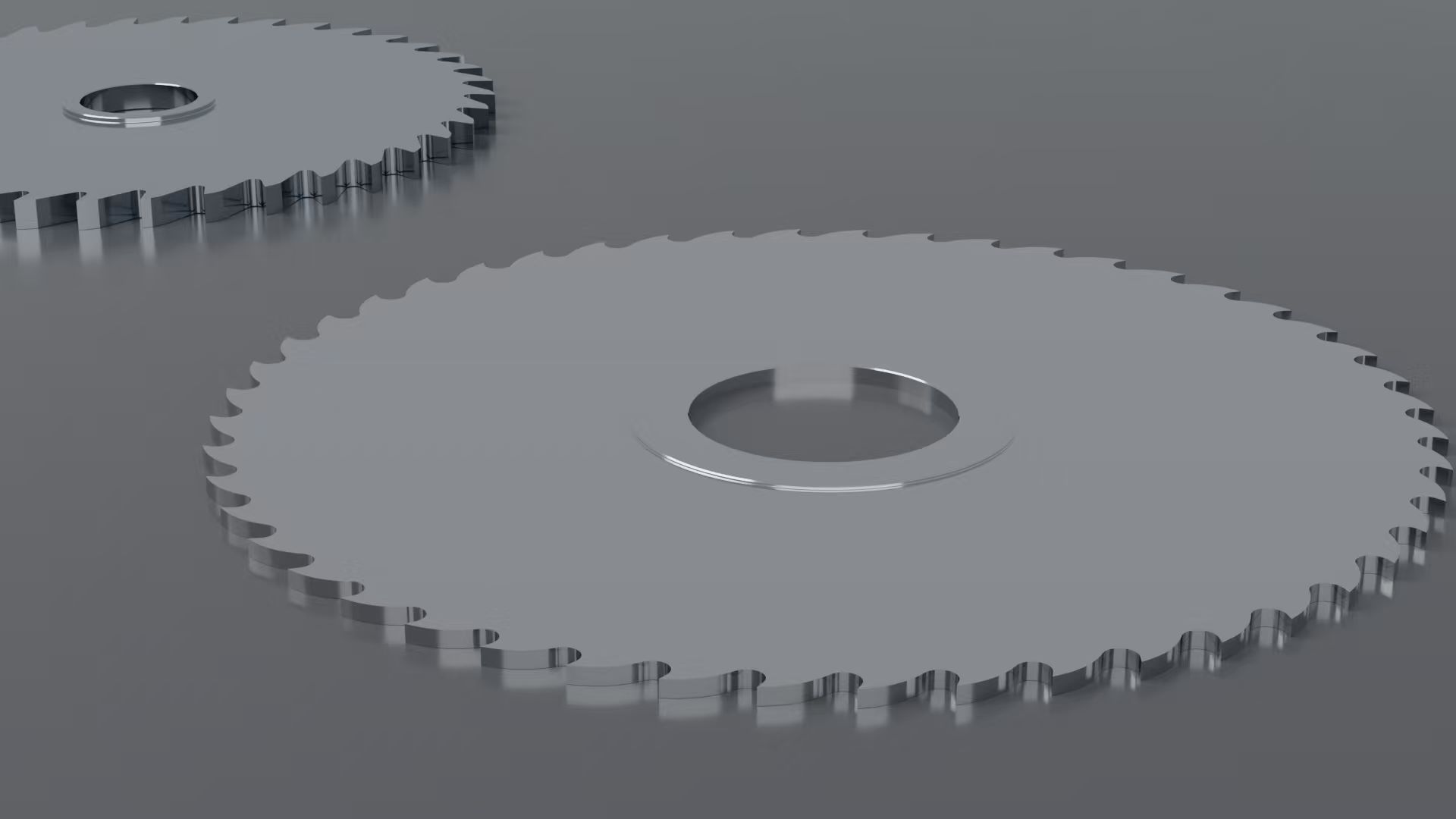
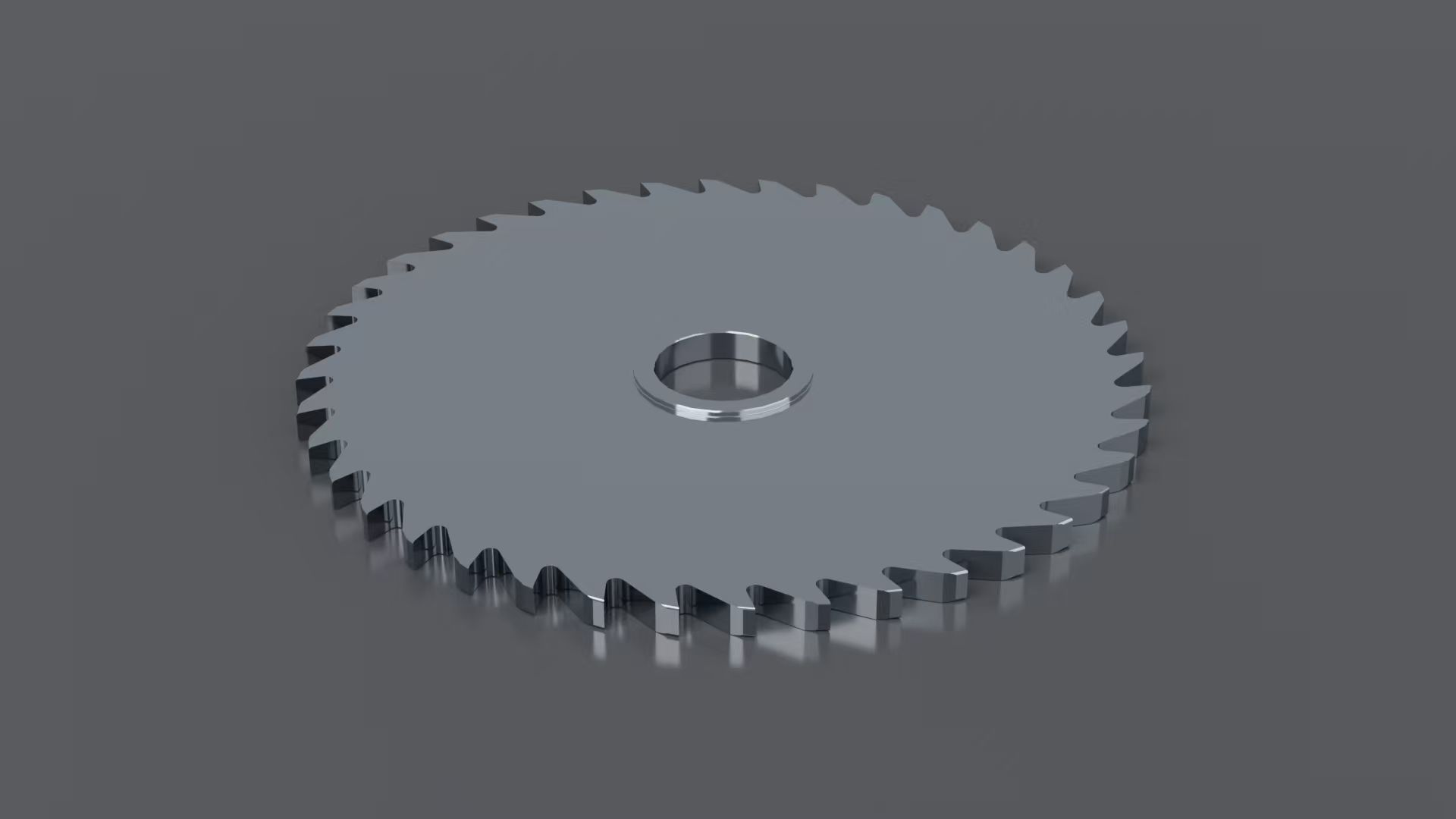
Austenitic stainless work-hardens the moment a tool rubs instead of cutting. A general-purpose tooth form polishes the surface, the hardness climbs, and the blade fails within a few centimetres of cut. The INOX variant changes the tooth geometry so the edge keeps biting under the hardened skin — same fine-pitch platform (DIN 1837), different tooth form.
| Family | D1 · mm | Bore H7 · mm | Thickness · mm | Teeth | Feed / tooth |
|---|---|---|---|---|---|
| INOX Tooth Form (DIN 1837) | 63–100 | 16–22 | 0.80–1.00 ±0.01 | 80–120 | 0.005–0.05 mm |
If your stainless part needs a diameter or thickness outside 63–100 mm / 0.80–1.00 mm, we quote it as a special rather than stretch this range.
Cutting stainless is a discipline, not a speed contest: keep the feed per tooth at 0.005–0.05 mm so the edge never rubs, run 50–100 m/min with oil or emulsion — never dry — and let the coating handle the heat. TiCN or AlTiN are the usual starting points; uncoated works for gummy austenitic grades.
Typical parts: instrument tube and fittings, surgical and dental components, food and pharmaceutical equipment parts. On carbon or alloy steel the standard fine pitch is cheaper and faster; the INOX geometry earns its price only on stainless and heat-resistant alloys.
06 — Custom & enquiry
Coatings, Specials and Samples
Coarse-grain or fine-grain solid carbide, 8–12% cobalt, depending on the toughness and wear resistance the job needs. Coatings — TiN, TiCN, TiAlN, AlCrN or uncoated — are available on every size; our engineers pick the combination from the material you are cutting.
Special executions we grind: tooth forms B and W, saw sets on a common arbor, bores with keyway, non-standard diameters and thicknesses, private-label packing. Sample orders for standard sizes start at USD 200; non-standard work is quoted against lead time and geometry.
Tungstool Precision Technology (Shenzhen) · Cutting tools since 2002 · Exported to more than 20 countries · DHL door-to-door
07 — FAQ
Questions we get asked about this range
Fine pitch or coarse pitch — how do I choose?
Fine pitch for shallow slots and short cuts. Once the cut runs deeper than about a third of the blade diameter, the gullets have to carry the chips out and the coarse pitch becomes the safer choice.
What is the difference between the standard fine pitch and the INOX tooth form?
Same fine-pitch platform, different tooth geometry. The INOX form is ground for austenitic stainless, where a general-purpose tooth rubs instead of cutting, work-hardens the surface and fails early.
Can one blade cut both steel and stainless?
It can, but not well. Stainless rewards the INOX geometry and a coating that resists heat; carbon and alloy steel are cheaper and faster on the standard fine pitch.
What thickness tolerance do you hold?
±0.01 mm across the range, tightened to ±0.005 mm below 0.20 mm thickness.
Can you add a keyway or a special bore?
Yes — keyway bores, non-standard bores and saw sets on a common arbor are all ground to drawing.
How fast can you ship, and how does it arrive?
Standard sizes leave within 5 working days of the order — often in 2–3. Specials depend on the drawing and process, so we confirm the date once the geometry is agreed. We ship DHL door-to-door as standard, with SF, UPS and sea or air options by region; China to the UK on a DDP basis is usually about a week.