Tungstool · Slitting saws · Ground discs
Fully Ground Solid Carbide Discs
Faces ground, bore finished, teeth left to you — for tool makers who grind their own geometry.
8–35 mm and 40–120 mm · H7 bore · 0.10–6.00 mm thick
01 — Overview
What a Ground Carbide Disc Is For
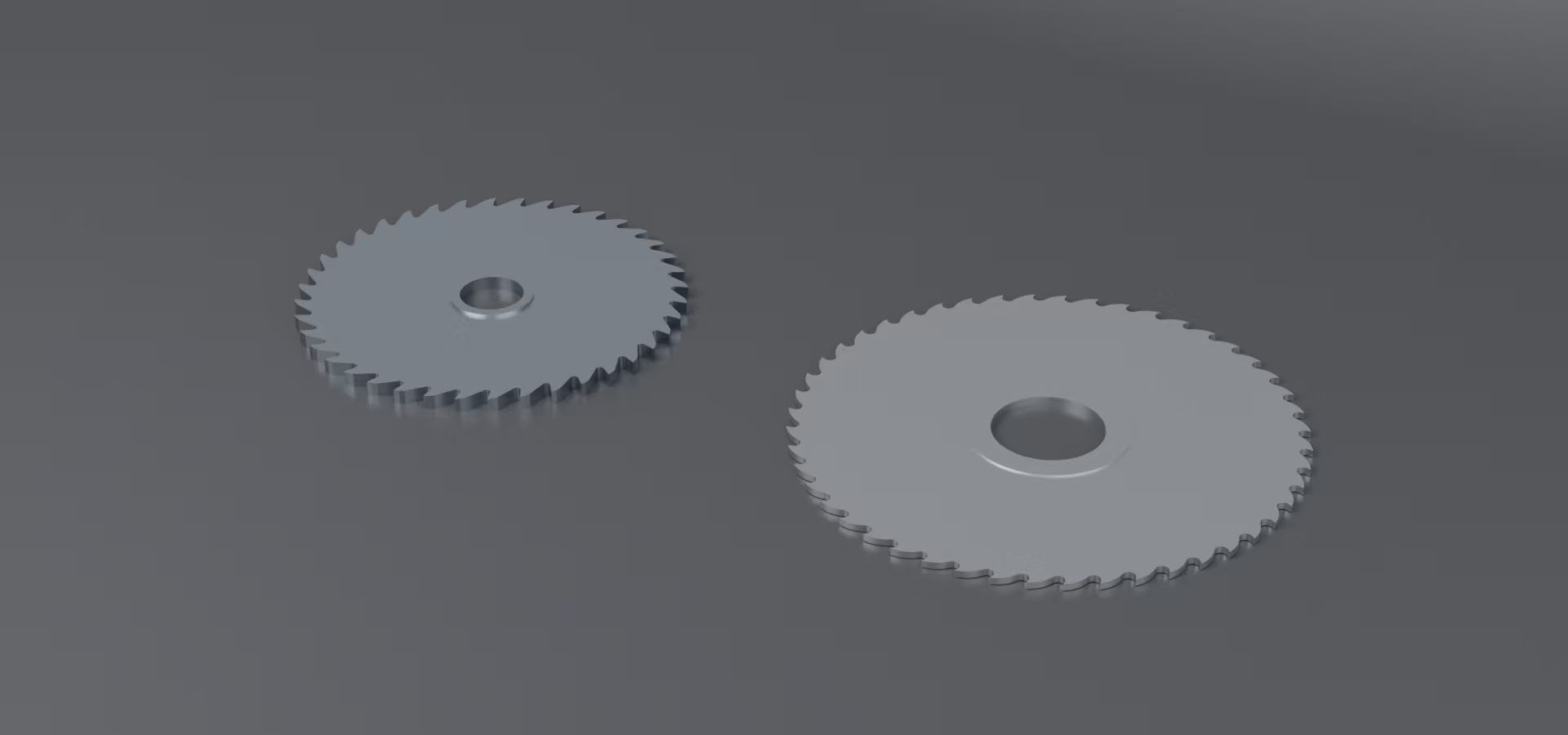
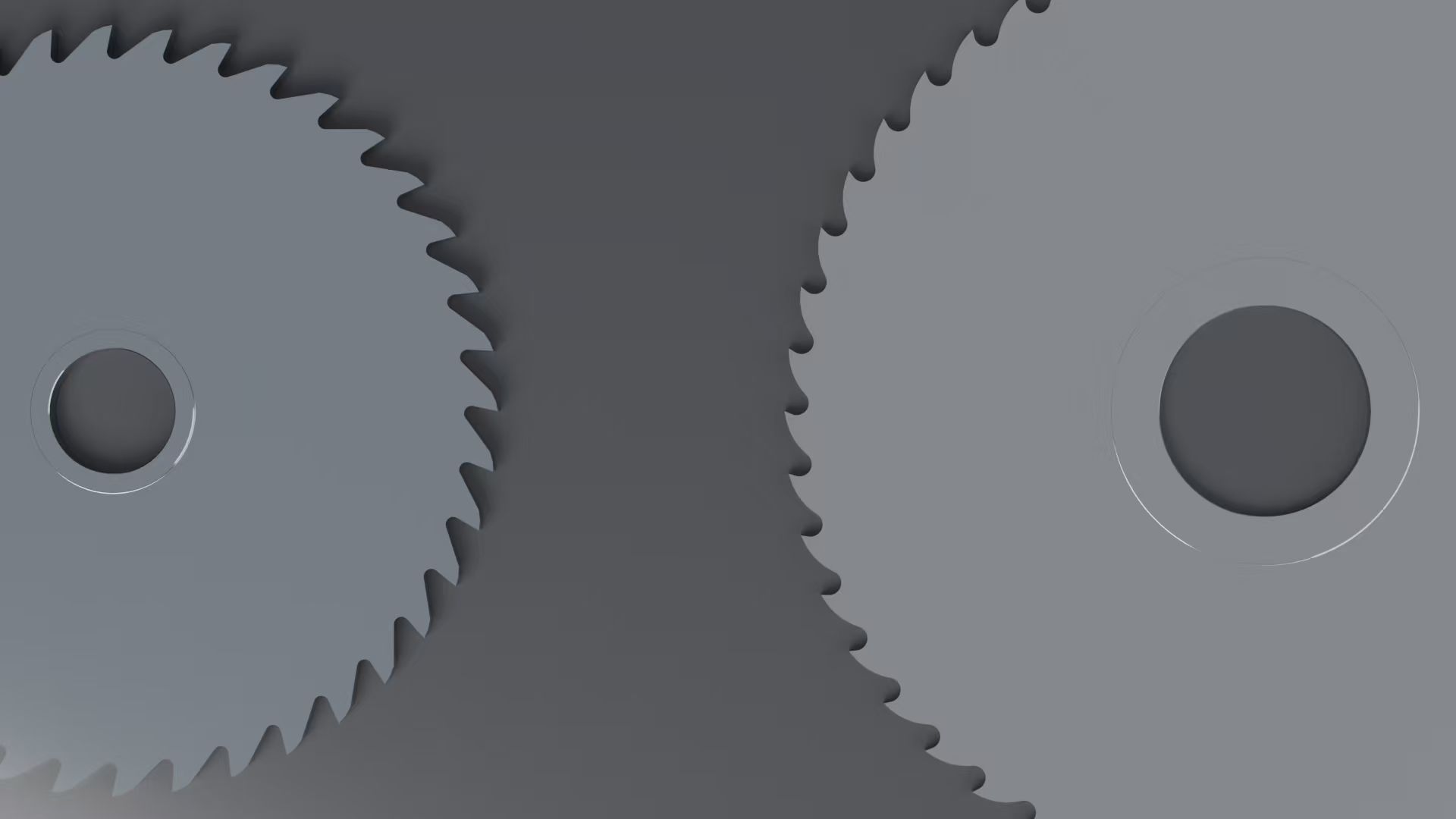
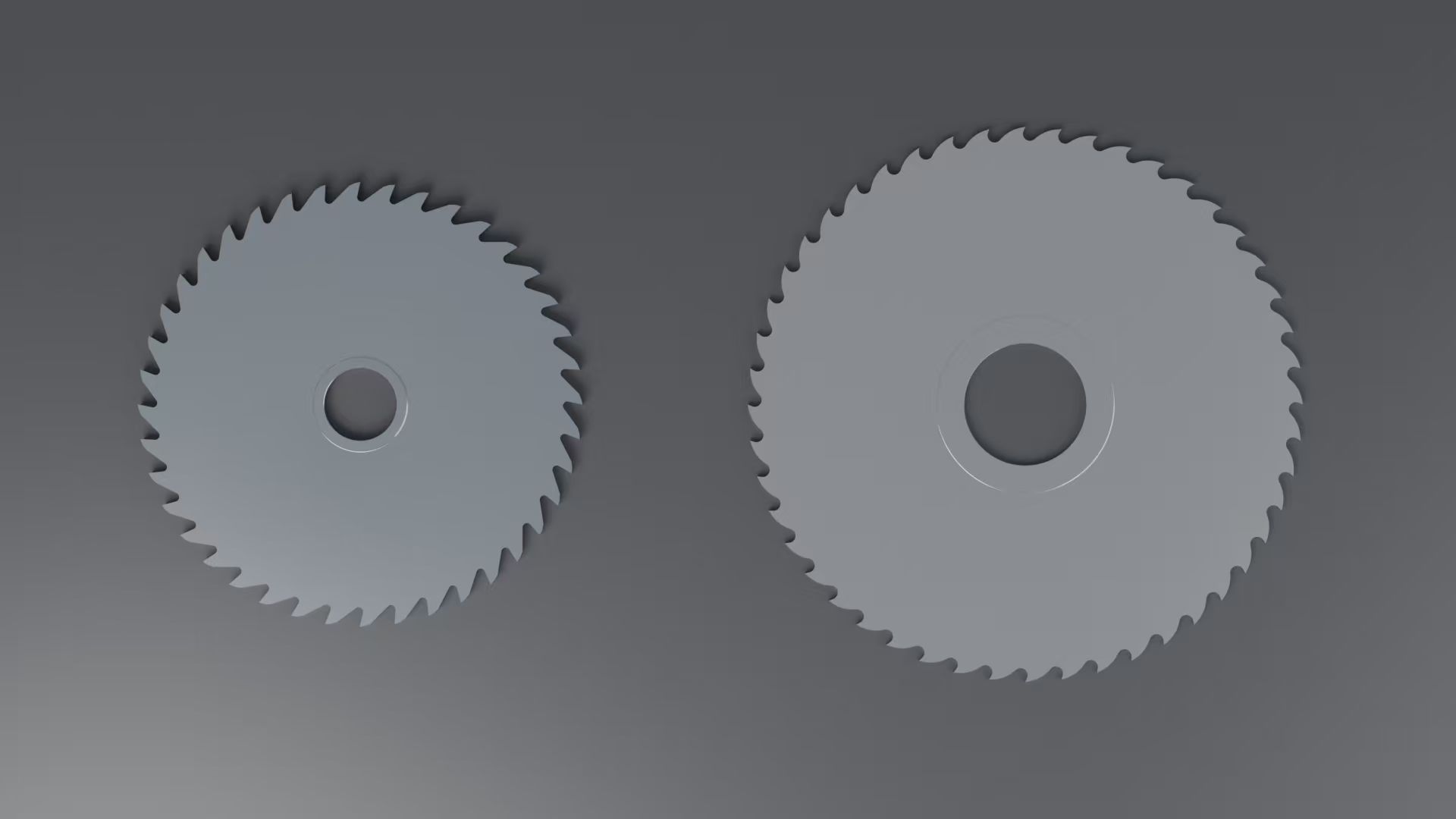
These are slitting-saw blanks: the disc is finished except for the teeth. Both faces are mirror-ground with clearance, the bore is held to H7, and the outside diameter is left 0.15 mm oversize so you have material to grind when you cut your own tooth form.
They exist for two situations: a tool maker who already grinds teeth and would rather not machine the disc from solid, and a buyer who wants to prove a geometry on a handful of blanks before committing to a production run of finished blades.
02 — Specifications
Dimensions and Tolerances
Held to DIN 1837 where the standard applies; dimensional inspection reports are available with your order.
| Family | D1 · mm | Bore H7 · mm | Thickness · mm | Teeth | Feed / tooth |
|---|---|---|---|---|---|
| Ground disc, 8–35 mm | 8–35 (+0.15) | 3–8 | 0.10–6.00 ±0.01 | — | — |
| Ground disc, 40–120 mm | 40–120 (+0.15) | 8–32 | 0.10–6.00 ±0.01 | — | — |
If you need a size that is not in the table, talk to us. We grind special diameters, bores and thicknesses to your drawing, and we will tell you straight away whether the geometry is practical.
03 — Cutting data
Cutting Data and Features
Start at the low end of the speed range and raise it until the chip looks right and the blade sounds steady. With TiN, TiCN or TiAlN coatings, add about 20% to the cutting speed.
| Feature | Specification |
|---|---|
| Faces | Mirror-ground both sides, with clearance |
| Bore | H7 |
| Outside diameter | 0.15 mm oversize for tooth grinding |
| Thickness | ±0.01 mm |
| Material | Coarse-grain or fine-grain solid carbide, 8–12% cobalt |
04 — Applications
Applications and Typical Buyers
Tool makers
Shops that grind their own tooth forms and want the disc finished to a known bore and thickness.
Geometry trials
A few blanks to test a new tooth form before ordering finished saws.
Small-batch specials
When the quantity does not justify a full production run of ground teeth.
If you need a blade that cuts as delivered, the finished families are the right purchase — fine, coarse, extra-fine or INOX, depending on the slot and the material. These discs are the raw material for that step, not a substitute for it.
05 — Custom & enquiry
Coatings, Specials and Samples
Thicknesses and bores outside the table are quoted on request. Coatings can be applied to blanks as well, though most buyers coat after grinding their teeth.
Standard sample orders start at USD 200; special diameters and thicknesses are quoted against lead time.
Tungstool Precision Technology (Shenzhen) · Cutting tools since 2002 · Exported to more than 20 countries · DHL door-to-door
06 — FAQ
Questions we get asked about this range
What exactly is a fully ground blank?
A slitting-saw disc finished except for the teeth: both faces mirror-ground with clearance, bore held to H7, and the outside diameter left 0.15 mm oversize.
Why leave the outside diameter oversize?
So you have material to grind when you cut your own tooth form. Once the teeth are ground, the diameter comes down to your final size.
Who normally buys blanks?
Tool makers who grind their own tooth geometry, and buyers who want to prove a form on a few discs before ordering finished blades.
Can you grind the teeth for me?
Yes — send the tooth form and we grind it. Most buyers find it cheaper to order a finished family instead, so tell us the form and quantity and we will say which route costs less.
What bore tolerance do the blanks have?
H7, and non-standard bores and thicknesses are quoted on request.
How fast can you ship, and how does it arrive?
Standard sizes leave within 5 working days of the order — often in 2–3. Specials depend on the drawing and process, so we confirm the date once the geometry is agreed. We ship DHL door-to-door as standard, with SF, UPS and sea or air options by region; China to the UK on a DDP basis is usually about a week.