Tungstool · Rod building tools
Precision Tapered Fluted Reamer
A helical-fluted reamer for enlarging cork and EVA grip bores so the grip fits the blank taper. HSS, six flutes, 405 mm overall, 1/4 in square shank.
HSS · HRC 60 cutting section · 375 mm working length · 1/4 in shank
01 — PTFR at a glance
Four Features Do the Work
PTFR is a cutting tool, not an abrasive sleeve. The cutting edges shave cork instead of burnishing it; the helical flutes carry the chips out of the bore; the round neck clears the top of the grip; and the square shank holds in a 1/4 in chuck.
It is designed to enlarge an existing bore. It is not a drill and will not start a hole in solid cork.
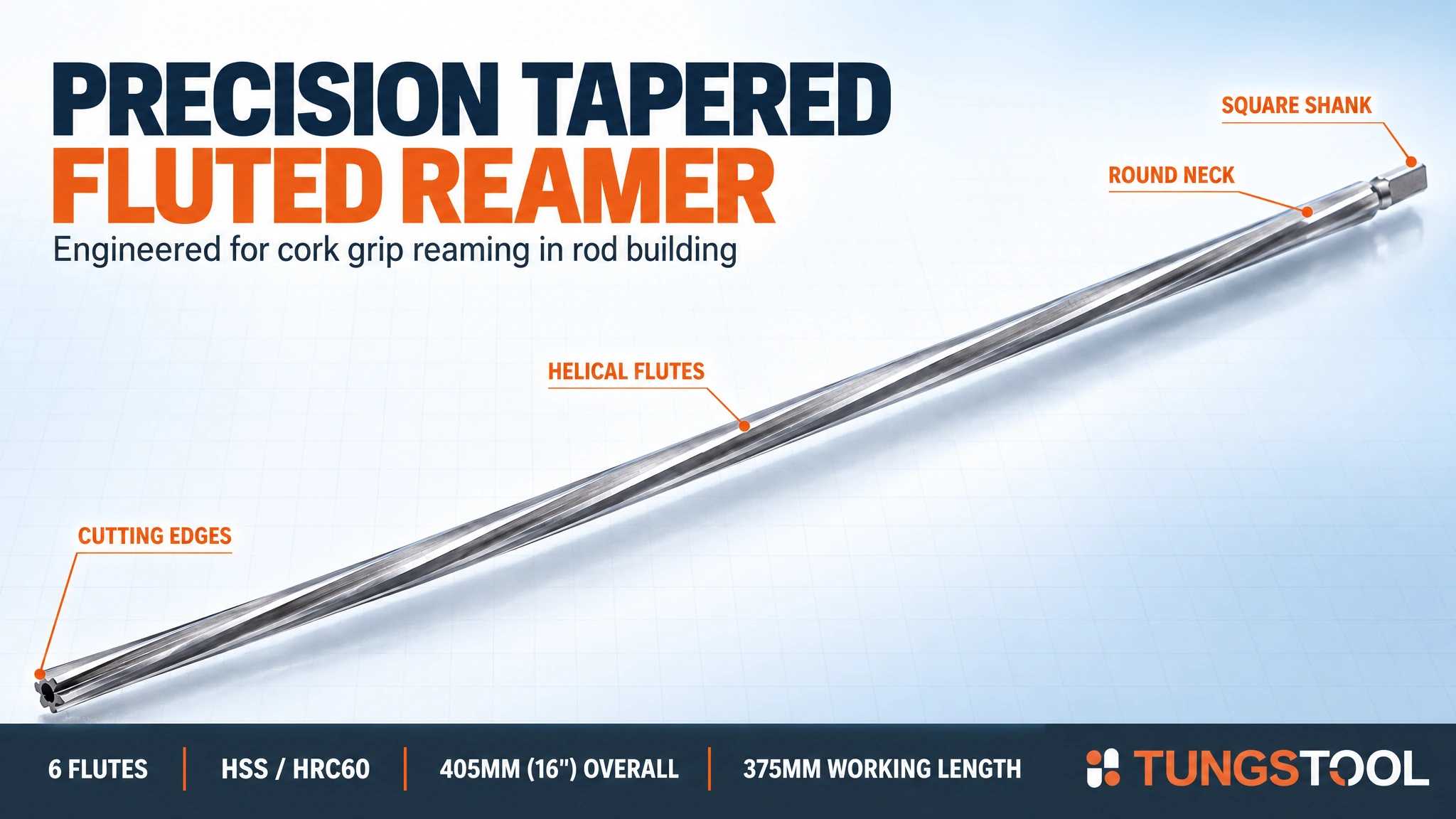
Figure 1 — Cutting edges, helical flutes, round neck and square shank.
02 — Grip fit and bore tolerance
The Bore Has to Follow the Blank
A cork grip arrives with a bore that rarely matches the blank. Too tight and the cork splits on assembly; too loose and the grip rocks on the blank. The bore has to follow the blank taper along its whole length, not just at the mouth.
That is the difference between enlarging a hole and preparing a fit. Abrasive reamers rely on pressure and dwell time, so the result depends on the operator. A fluted reamer removes a defined amount per pass, which makes the fit repeatable.
03 — Fluted cutting vs abrasive grinding
Cuts, Does Not Rub
Professional reaming systems are usually sold as a full set: many tapers, many sizes, a system to learn. PTFR takes the other route — one base taper and five diameter ranges that overlap, so the choice is made by the bore in front of you rather than by a chart.
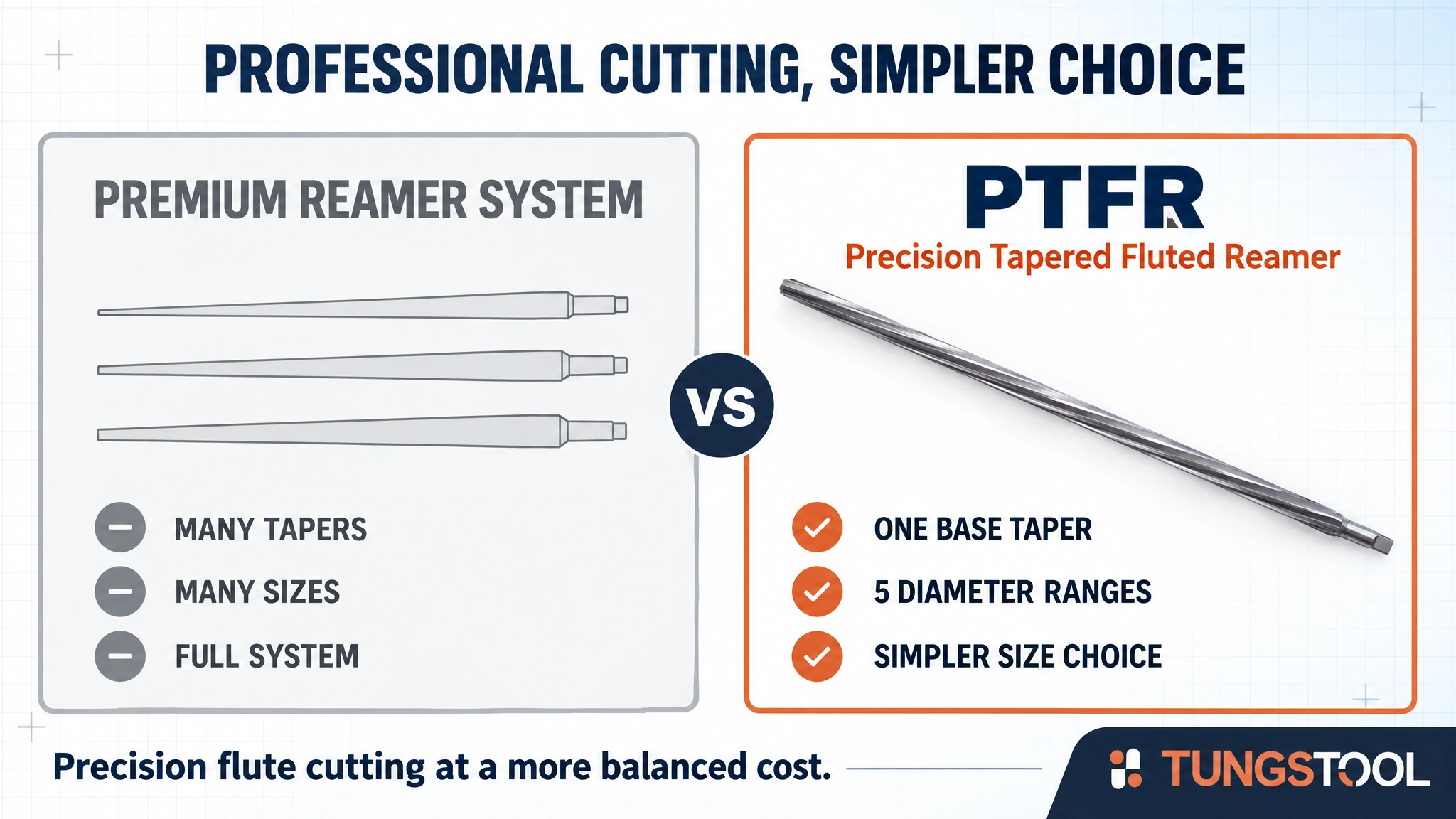
Figure 2 — One base taper and five diameter ranges instead of a multi-taper system.
Cuts, does not rub
Six cutting edges shave cork cleanly. An abrasive sleeve burnishes and loads up.
One base taper
Five ranges cover fly to surf rods without choosing between tapers.
Predictable removal
Feed rate controls how much comes off, so the fit repeats.
04 — Five sizes
One Base Taper, Five Diameter Ranges
Rod weight is a starting point, not a rule. Adjacent ranges overlap on purpose — choose by the bore and the blank you actually have.
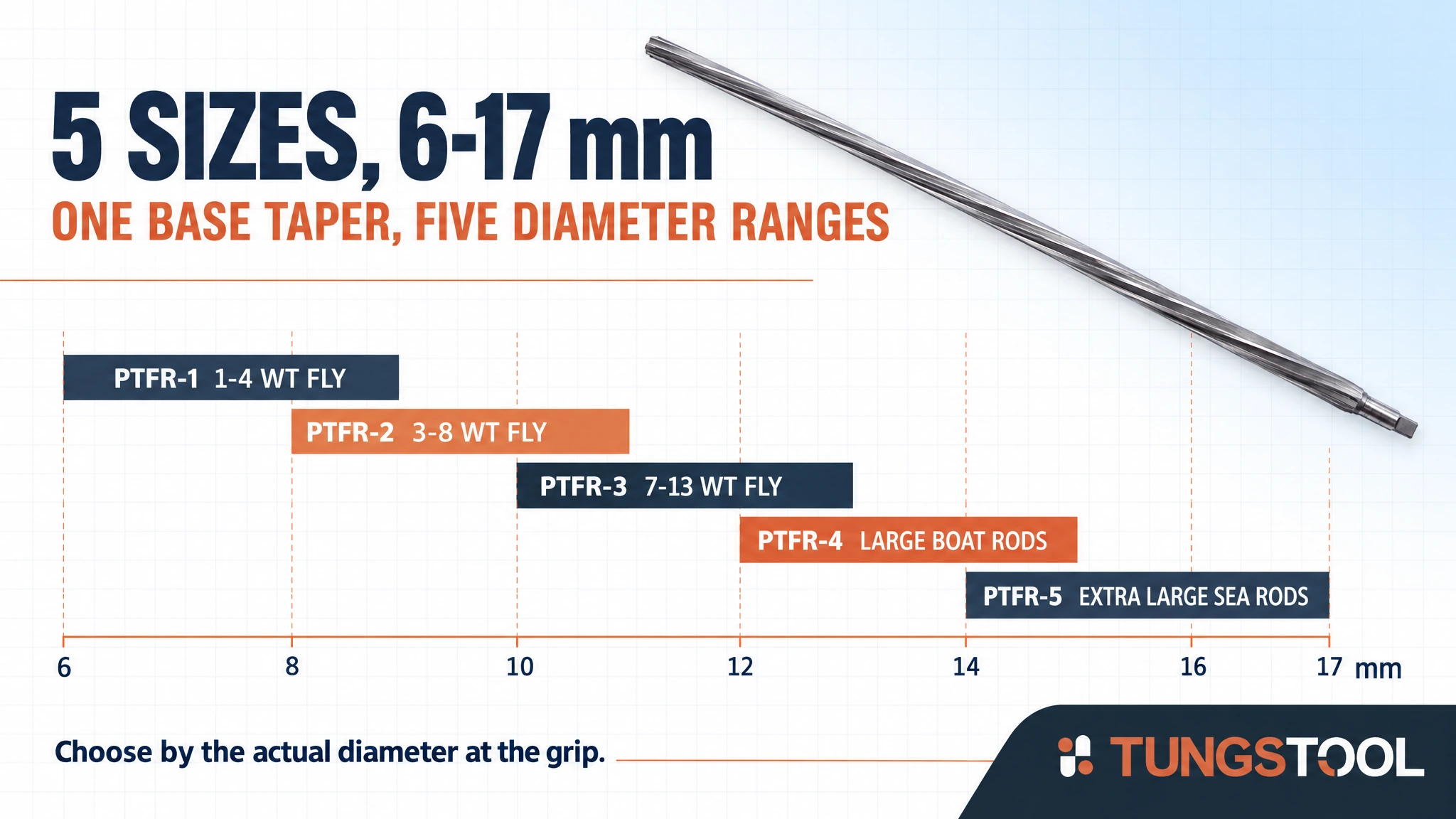
Figure 3 — Diameter coverage from 6 mm to 17 mm across the five models.
| Model | Cutting diameter | Typical rod |
|---|---|---|
| D6–9 | 6–9 mm (0.236–0.354 in) | 1–4 wt fly rod |
| D8–11 | 8–11 mm (0.315–0.433 in) | 3–8 wt fly rod |
| D10–13 | 10–13 mm (0.394–0.512 in) | 7–13 wt fly rod |
| D12–15 | 12–15 mm (0.472–0.591 in) | Large boat rod |
| D14–17 | 14–17 mm (0.551–0.669 in) | Extra-large surf rod |
05 — Technical data
Specifications
PTFR enlarges an existing bore. It is not a drill and is not intended to start a hole in solid cork.
06 — Reaming procedure
Three Steps, No Guesswork
1. Check the bore. Measure the existing hole and the blank diameter at both ends of the grip. 2. Mount the tool. 1/4 in shank in a drill or lathe chuck; the grip is clamped, never held by hand. 3. Ream in stages. Forward rotation only, dry, clearing chips and test-fitting as you go.
Never use reverse rotation for cutting. Stop if the grip shifts, the tool binds, or vibration starts.
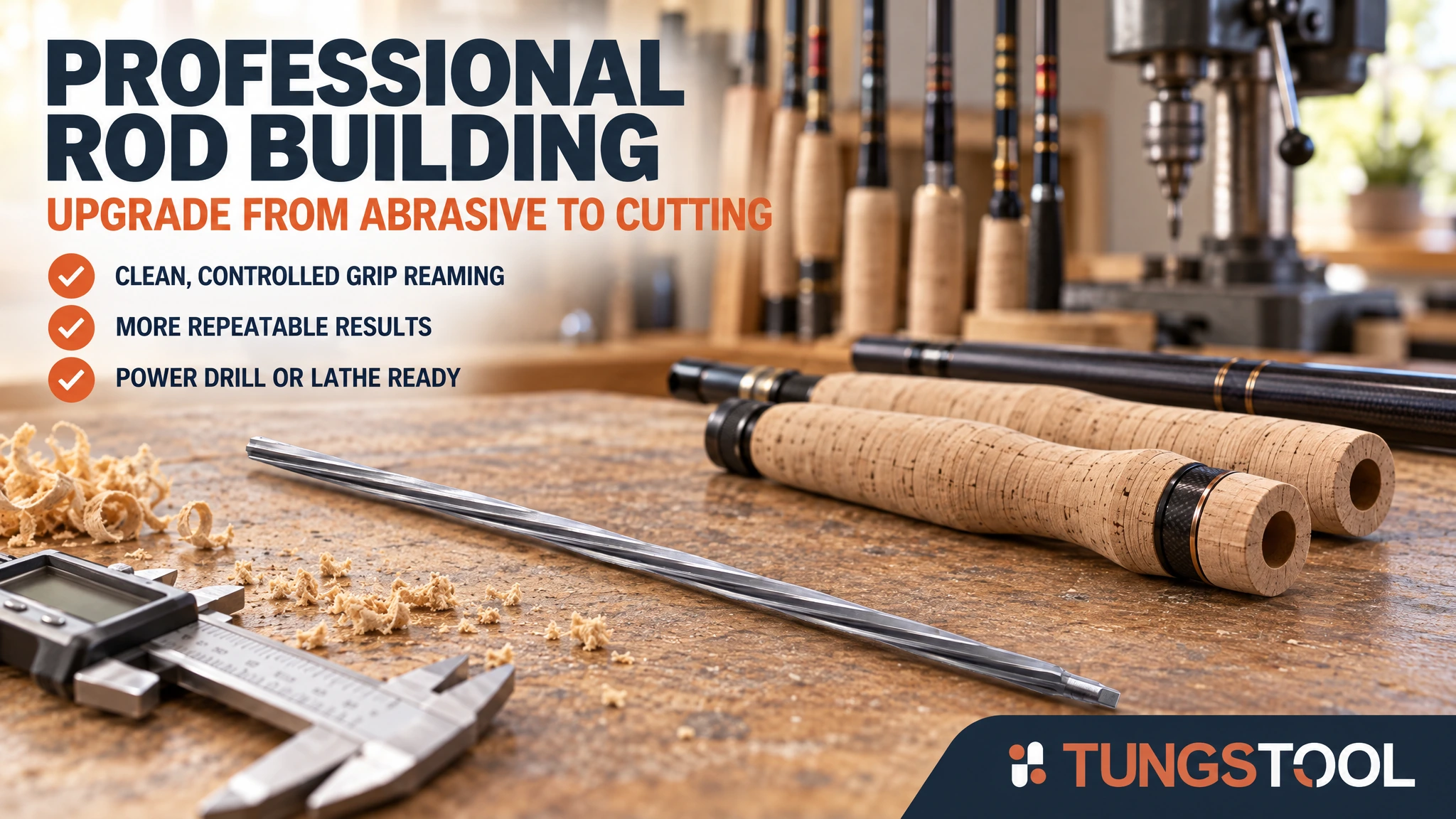
Figure 4 — Reaming a cork grip with the blank fitted progressively.
07 — Typical users
From One-Off Builds to Production
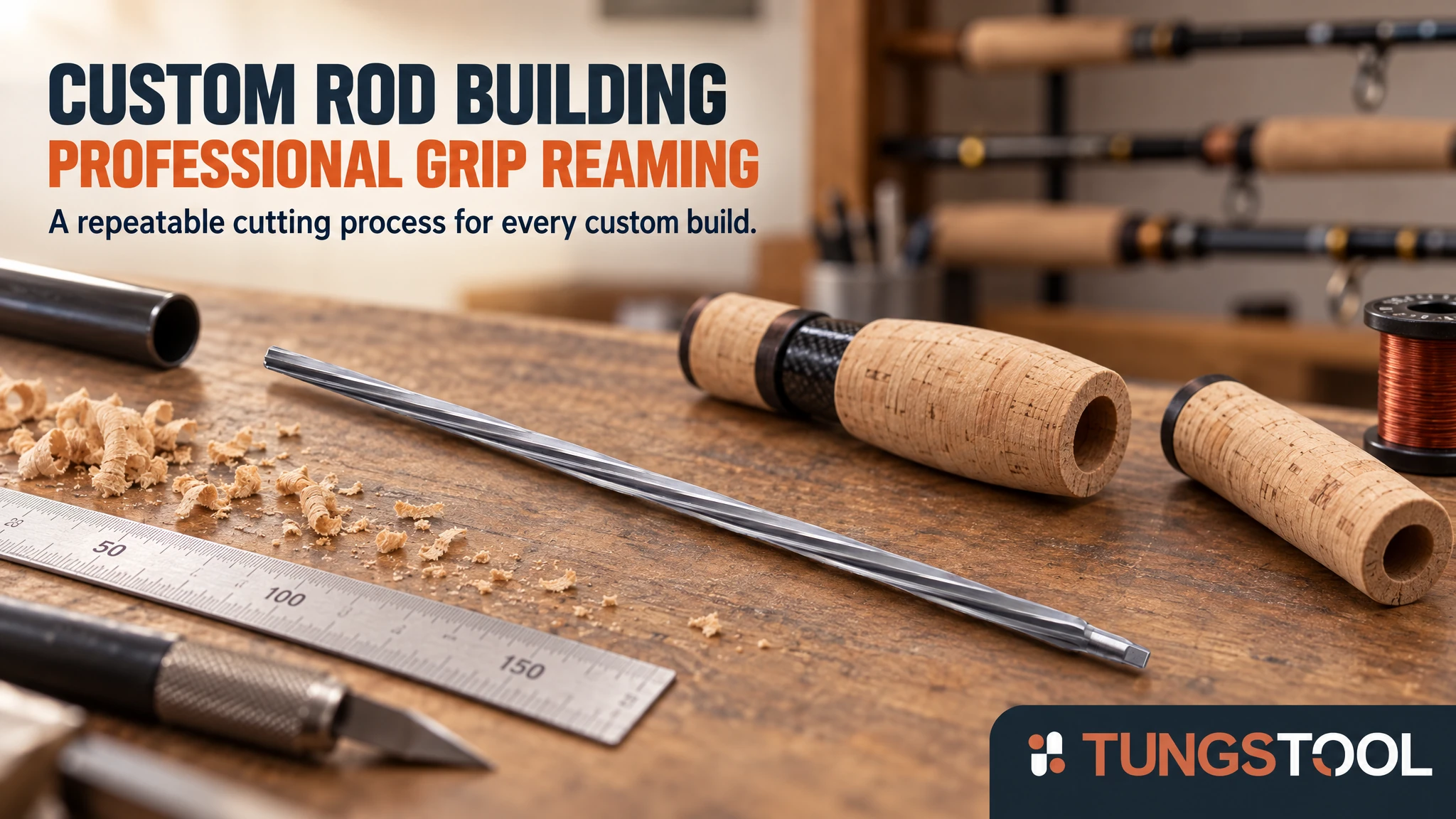
Custom rod builders
A cleaner bore than an abrasive reamer, at a price one builder can justify.
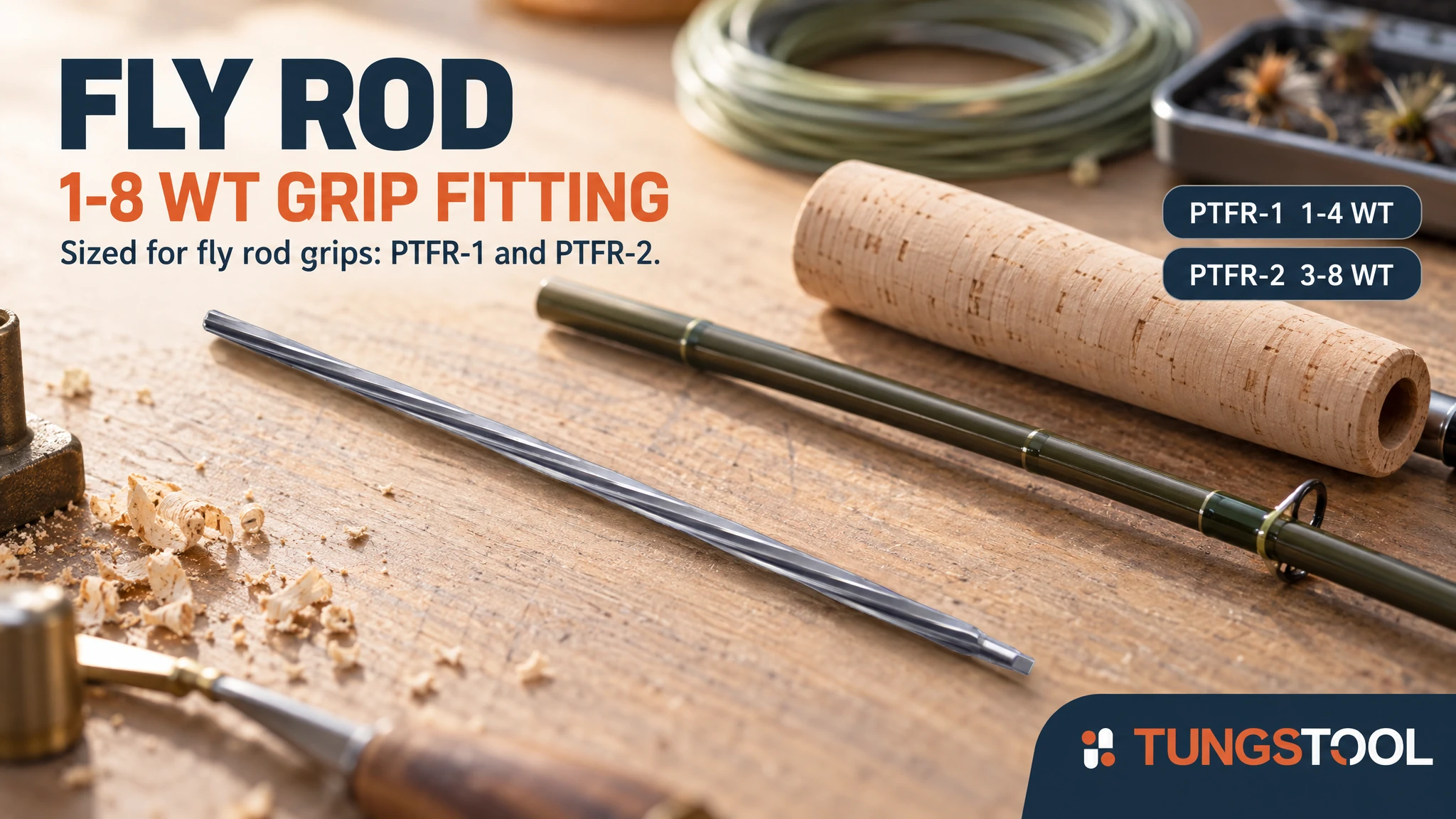
Fly rod workshops
The five ranges cover 1 wt to 13 wt without changing tool families.
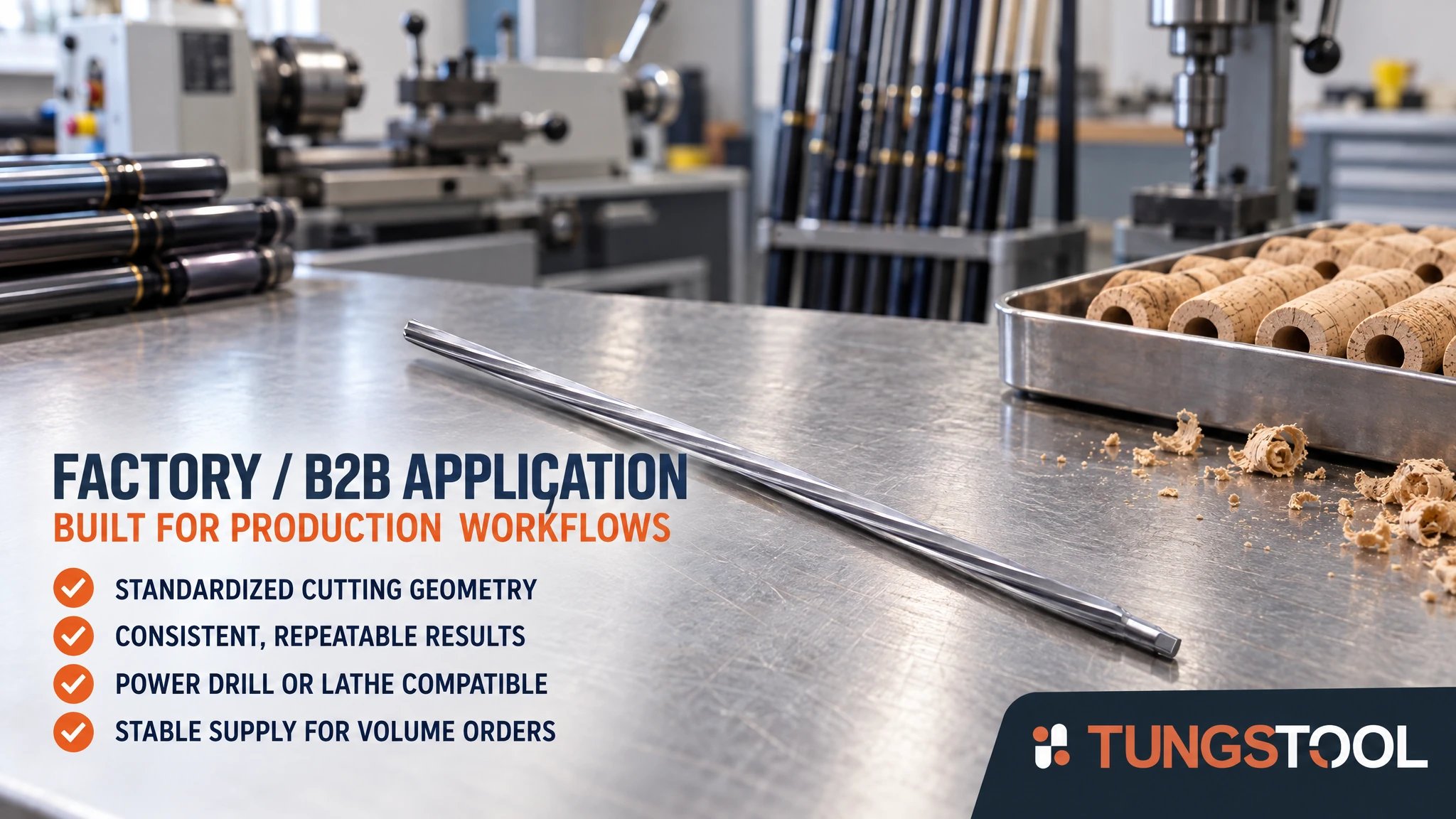
Rod manufacturers
Repeatable removal across a production run, with a cutting edge that does not wear like abrasive.
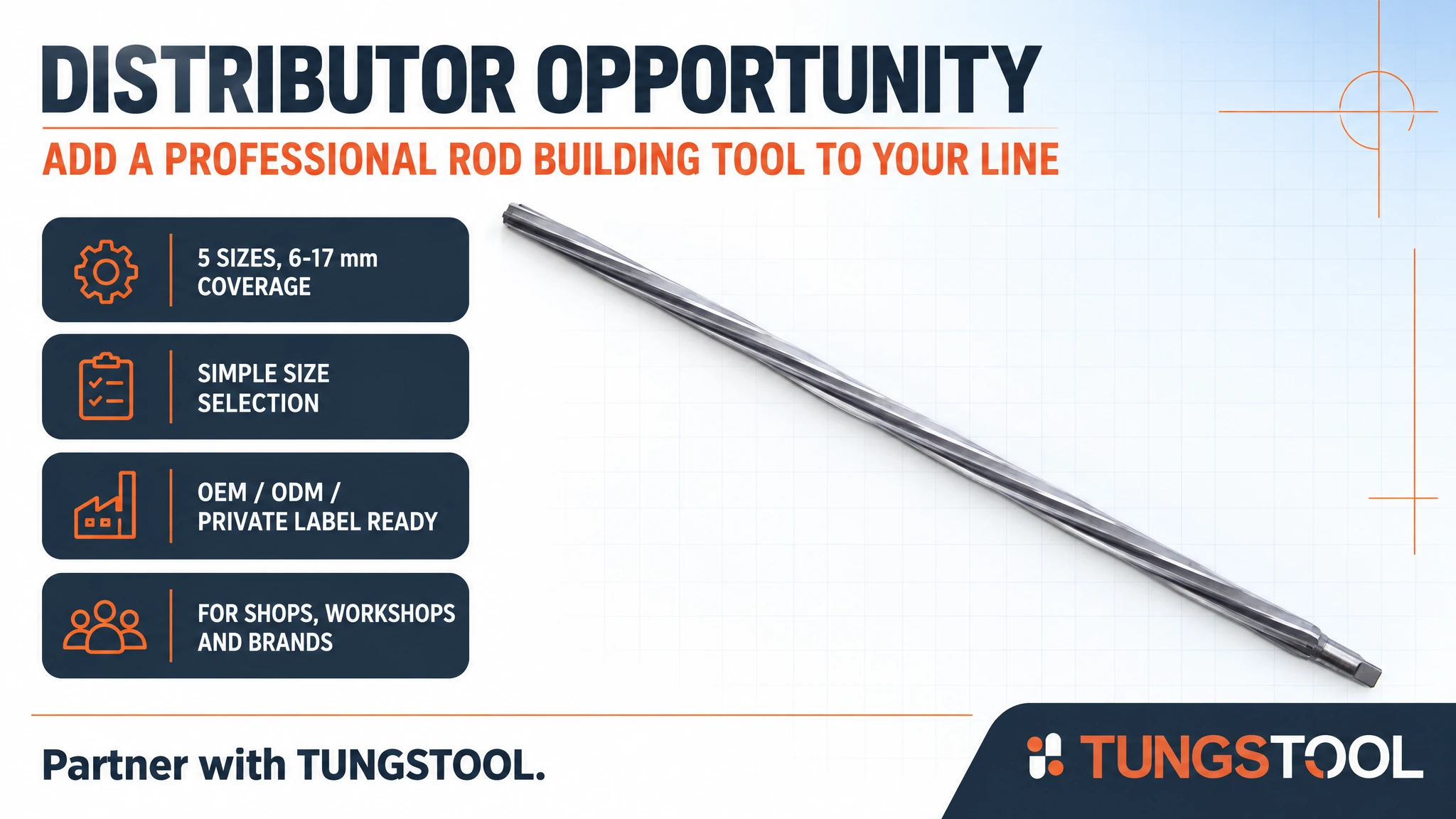
Distributors
Private label and stock planning for tackle distributors and rod brands.
08 — FAQ
Questions About PTFR
Does PTFR drill a new hole?
No. It enlarges an existing bore in cork or EVA. Starting a hole in solid material is a different operation with a different tool.
Will it fit a standard drill?
The shank is 1/4 in (6.35 mm), which fits common chuck sizes. It also runs in a lathe with the grip clamped.
Which model for my rod?
Measure the bore and the blank, then choose the range that contains both the current and target diameter. Adjacent ranges overlap on purpose.
Does it need lubricant?
No. Use it dry and clear the chips as you go; cork dust loads the flutes if you let it build up.
Can I use it on EVA?
Yes — cork and EVA are the two grip materials it is intended for.
Ask us which size fits your grip: WhatsApp +86 186 7551 4593 · info@tungstool.com