Tungstool · Slitting saws · Coarse pitch · DIN 1838
Coarse-Pitch Solid Carbide Slitting Saws
Fewer teeth, deeper gullets, and a blade that keeps cutting when the slot gets deep.
15–120 mm · 20–80 teeth · 0.20–6.00 mm thick · DIN 1838
01 — Overview
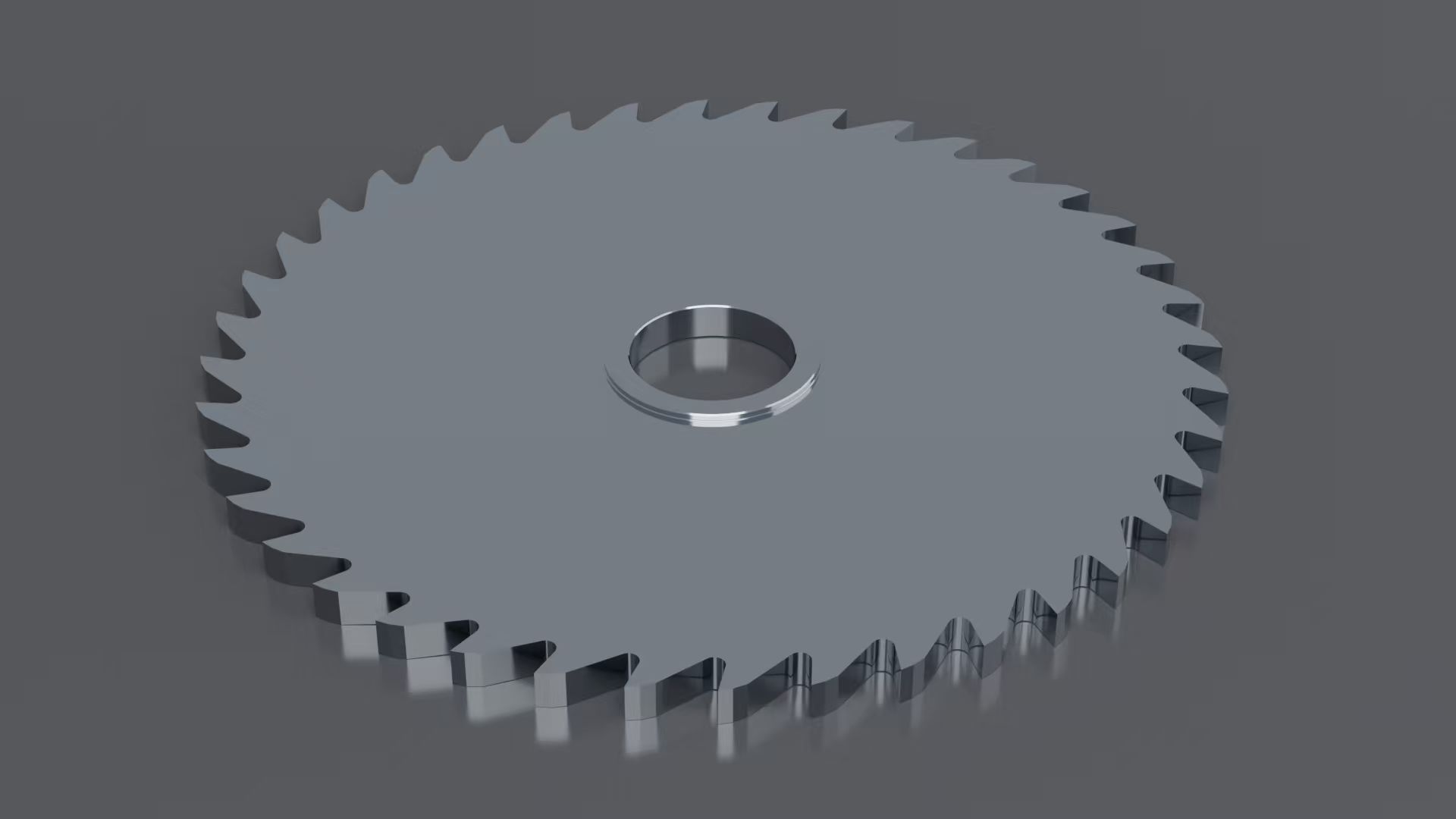
What a Coarse-Pitch Slitting Saw Is For
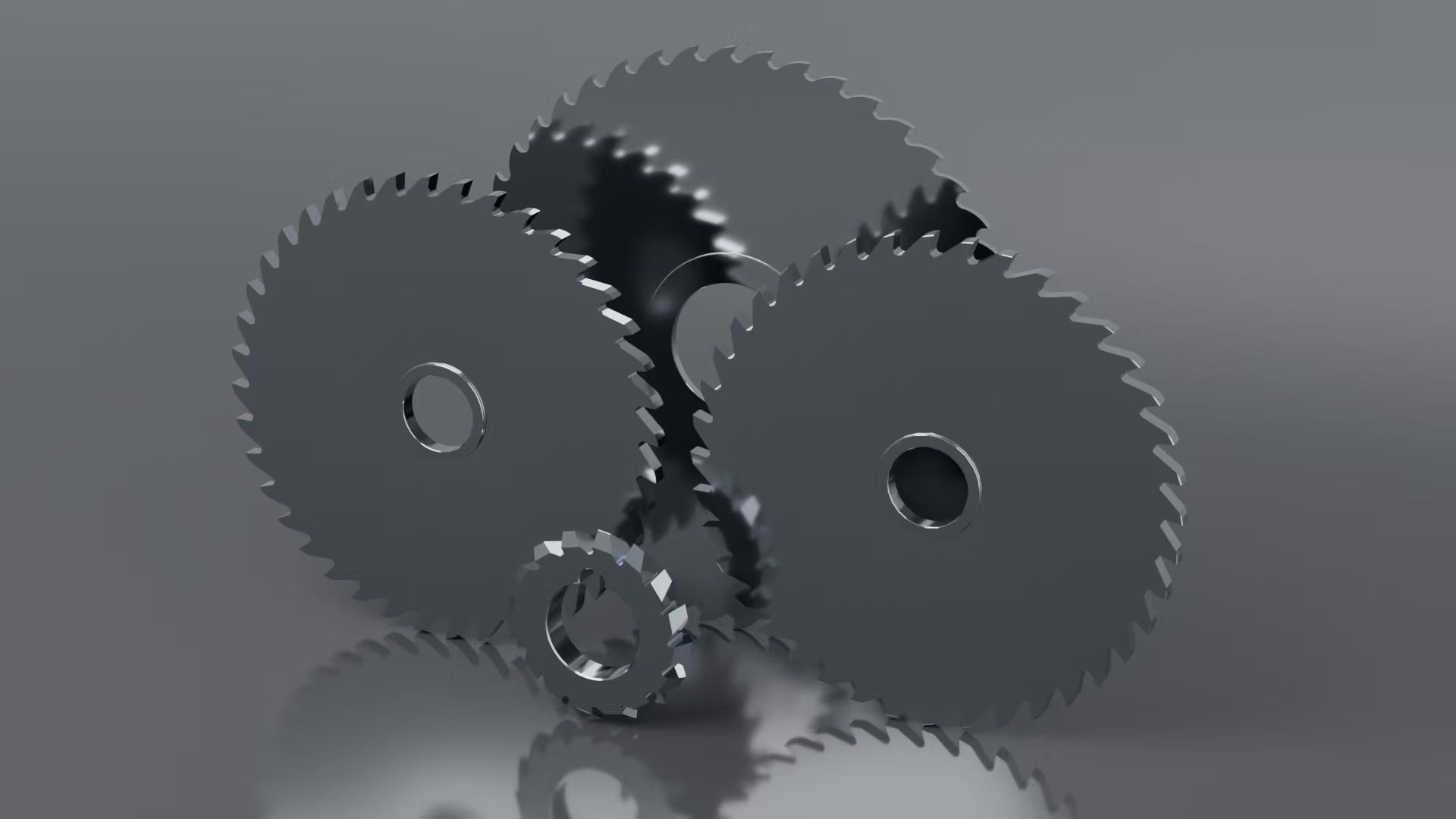
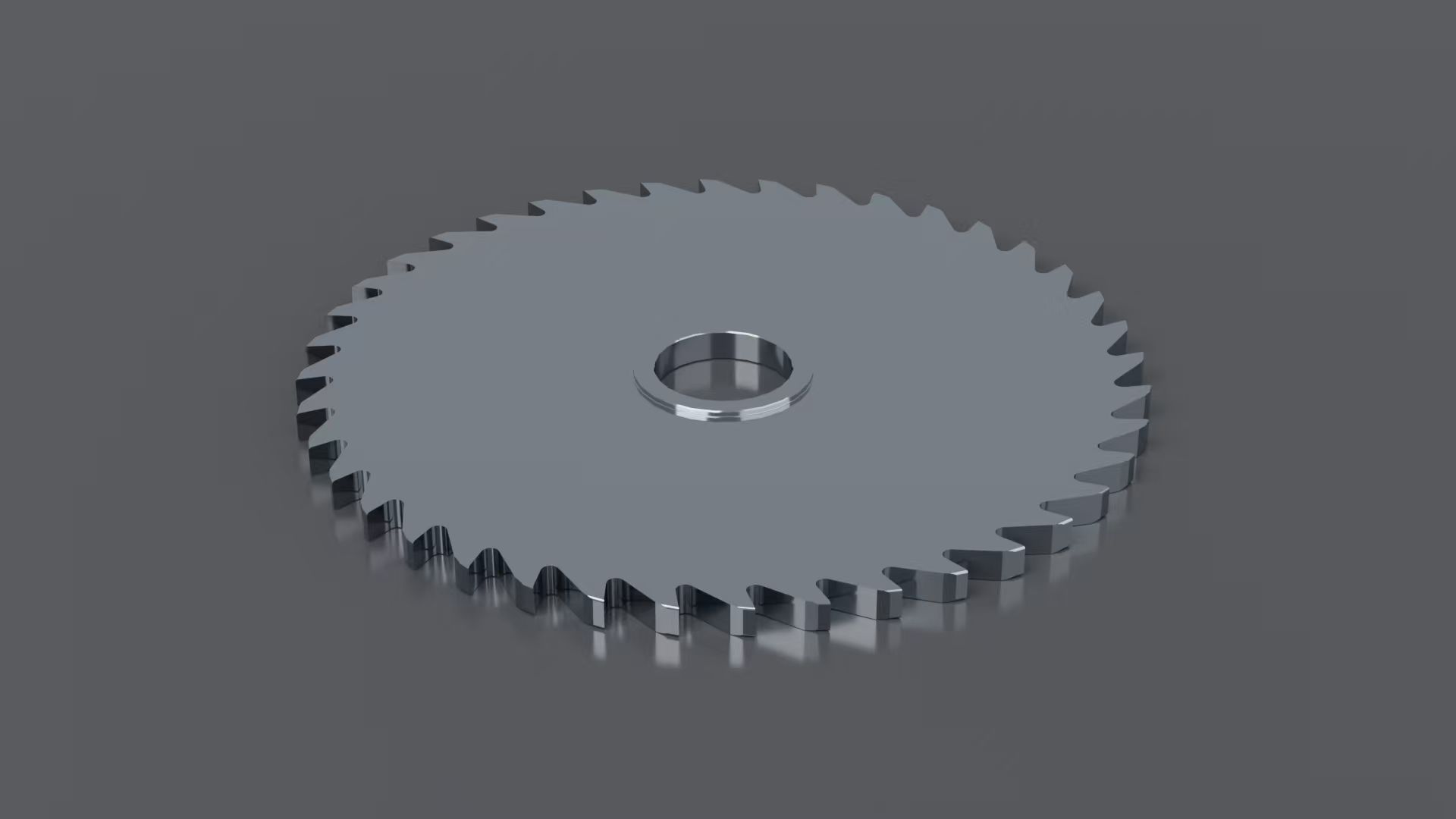
Coarse pitch is the answer to one problem: chips. With 20 to 80 teeth on the same diameter range as the fine pitch, each gullet is much larger, so material clears instead of packing. That is what lets the blade keep cutting as the slot deepens or the cut runs long.
The trade is surface finish and burr. Fewer teeth means a heavier bite per tooth — 0.01 to 0.1 mm, roughly double the fine pitch — so the wall is rougher and the exit burr larger. For roughing, cut-off and deep grooving that is the right trade; for a finished keyway it is not.
02 — Specifications
Dimensions and Tolerances
Held to DIN 1838; dimensional inspection reports are available with your order.
| Family | D1 · mm | Bore H7 · mm | Thickness · mm | Teeth | Feed / tooth |
|---|---|---|---|---|---|
| Coarse Tooth (DIN 1838) | 15–120 | 5–32 | 0.20–6.00 ±0.01 | 20–80 | 0.01–0.1 mm |
If you need a size that is not in the table, talk to us. We grind special diameters, bores and thicknesses to your drawing, and we will tell you straight away whether the geometry is practical.
03 — Cutting data
Cutting Data: Speeds and Feeds
Start at the low end of the speed range and raise it until the chip looks right and the blade sounds steady. With TiN, TiCN or TiAlN coatings, add about 20% to the cutting speed.
| Material | Group | Vc · m/min | Feed / tooth | Coolant |
|---|---|---|---|---|
| Free-cutting steel | P | 120–240 | 0.01–0.1 mm | Oil or emulsion |
| Alloy steel, by hardness | P | 40–200 | 0.01–0.1 mm | Oil or emulsion |
| Cast iron | K | 60–120 | 0.01–0.1 mm | Dry, air blast or emulsion |
| Aluminium, Si < 12% | N | 150–600 | 0.01–0.1 mm | Dry or air |
| Thermoplastics | N | 200–700 | 0.01–0.1 mm | Dry |
04 — Applications
Applications and Typical Parts
Bar-stock cut-off
Long, deep cuts on automatic lathes, where the blade has to clear chips continuously.
Deep grooves in fixtures and mould inserts
Slots well past a third of the blade diameter.
Tube and profile sectioning
Thick-wall tube and extruded profile where the cut length exceeds the blade radius.
Roughing before finishing
Remove the bulk with the coarse pitch, then finish with the fine pitch.
Switch to the fine pitch when the slot is shallow, the wall finish matters, or the part is small enough that a heavy feed per tooth would distort it. Switch to the extra-fine pitch when the wall is thin enough that any real cutting force is too much.
05 — Custom & enquiry
Coatings, Specials and Samples
Coarse-grain or fine-grain solid carbide, 8–12% cobalt. Coatings — TiN, TiCN, TiAlN, AlCrN or uncoated — on every size, selected by our engineers against the material and the depth of cut.
Specials: tooth forms B and W, saw sets on a common arbor, bores with keyway, non-standard diameters and thicknesses, private-label packing. Standard sample orders start at USD 200; non-standard geometry is quoted individually.
Tungstool Precision Technology (Shenzhen) · Cutting tools since 2002 · Exported to more than 20 countries · DHL door-to-door
06 — FAQ
Questions we get asked about this range
How deep can a coarse-pitch blade cut?
Depth is limited by chip clearance more than by blade diameter. As a rule of thumb, once the slot passes a third of the diameter the coarse pitch is the safer choice — tell us the depth and we will confirm.
Will the surface finish be worse than with a fine pitch?
Slightly, yes — the feed per tooth is roughly double. Use coarse pitch for roughing and cut-off, then finish with the fine pitch if the wall has to be clean.
Can it cut aluminium?
Yes, and it is often the better choice there: aluminium chips weld to a blade when the gullets are too tight. Run dry or with air blast and keep the feed up.
Do you supply saw sets on one arbor?
Yes — several blades on a common arbor with spacing rings, ground as a set so the widths match.
What thickness should I use for a deep slot?
Thicker blades resist deflection better, but they remove more material and load the machine harder. Send the depth and width and we will suggest a thickness rather than guess.
How fast can you ship, and how does it arrive?
Standard sizes leave within 5 working days of the order — often in 2–3. Specials depend on the drawing and process, so we confirm the date once the geometry is agreed. We ship DHL door-to-door as standard, with SF, UPS and sea or air options by region; China to the UK on a DDP basis is usually about a week.