Tungstool · Slitting saws · Extra-fine pitch
Extra-Fine Pitch Solid Carbide Slitting Saws
For thin walls, fragile parts and Swiss-type lathes — where the cut has to stay light.
8–63 mm · 48–128 teeth · 0.10–3.00 mm thick
01 — Overview
What an Extra-Fine Slitting Saw Is For
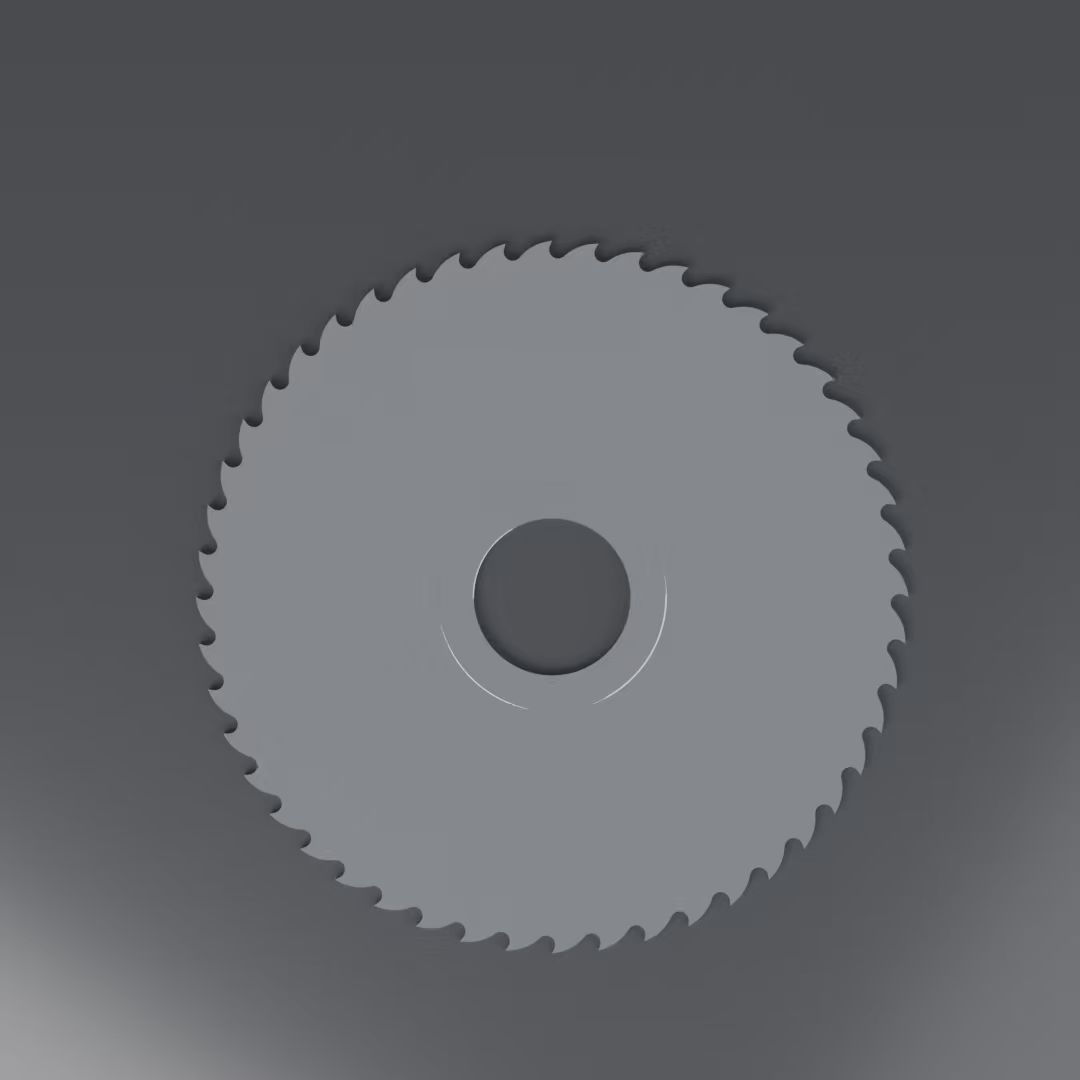
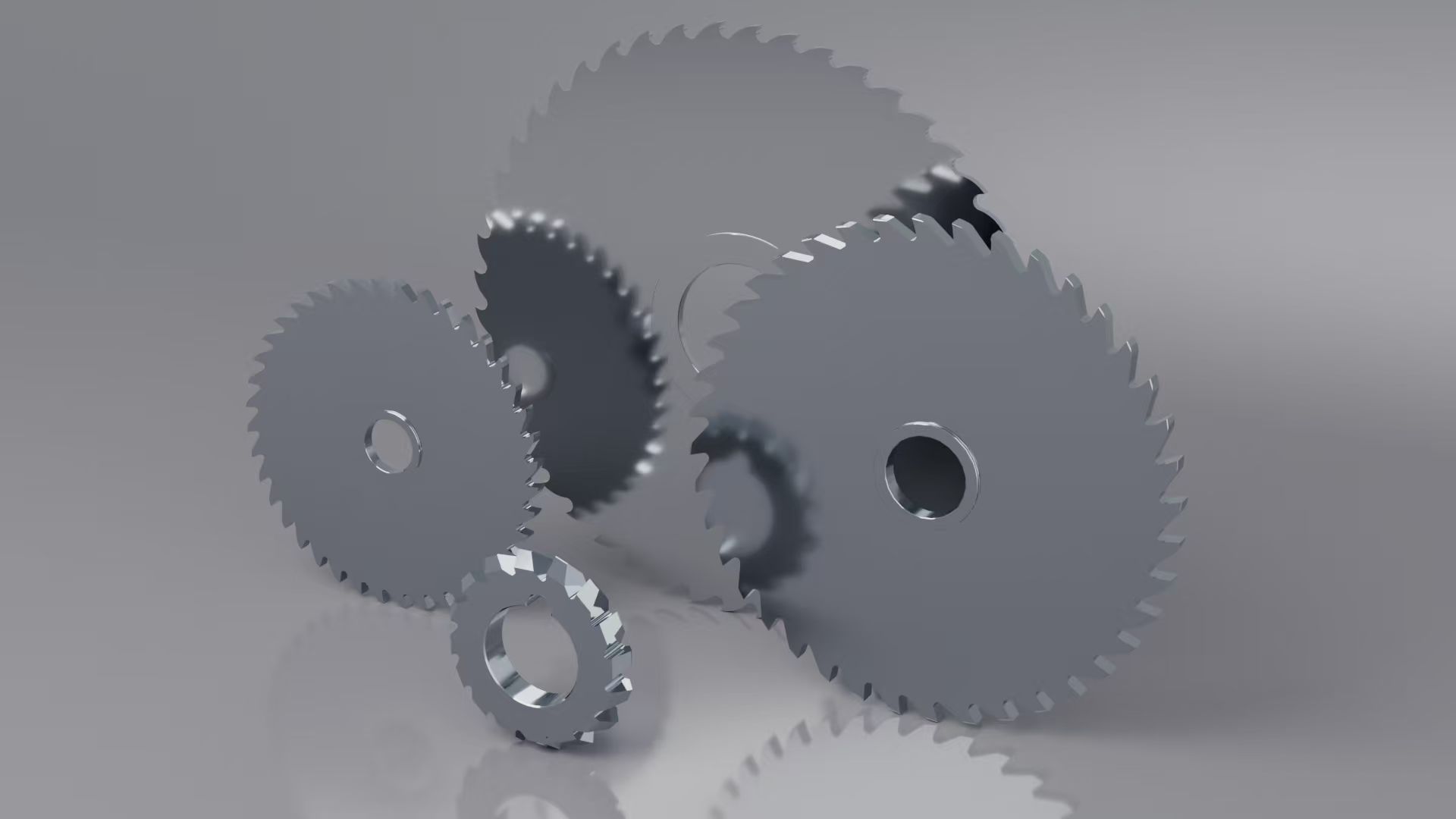
At 8 to 63 mm diameter and 48 to 128 teeth, this is the smallest and lightest cutting family we grind. Feed per tooth runs 0.002–0.03 mm, roughly a quarter of the fine pitch, because the point is not speed — it is keeping the cutting force below whatever would deflect or crush the workpiece.
It is the standard choice on Swiss-type and automatic lathes for small precision parts, and for thin-wall tube where a heavier blade would collapse the section before it cut. Below 0.20 mm thickness the blades are ground to ±0.005 mm; the rest of the range holds ±0.01 mm.
02 — Specifications
Dimensions and Tolerances
Dimensional inspection reports are available with your order, and special diameters and thicknesses are ground to drawing.
| Family | D1 · mm | Bore H7 · mm | Thickness · mm | Teeth | Feed / tooth |
|---|---|---|---|---|---|
| Extra-Fine Tooth | 8–63 | 3–16 | 0.10–3.00 ( ±0.005 below 0.20; ±0.01 above ) | 48–128 | 0.002–0.03 mm |
If you need a size that is not in the table, talk to us. We grind special diameters, bores and thicknesses to your drawing.
03 — Cutting data
Cutting Data: Speeds and Feeds
Start at the low end of the speed range and raise it until the chip looks right and the blade sounds steady. With TiN, TiCN or TiAlN coatings, add about 20% to the cutting speed.
| Material | Group | Vc · m/min | Feed / tooth | Coolant |
|---|---|---|---|---|
| Free-cutting steel, thin sections | P | 120–240 | 0.002–0.02 mm | Oil or emulsion |
| Alloy steel, fragile parts | P | 40–200 | 0.002–0.02 mm | Oil or emulsion |
| Austenitic stainless, thin wall | M | 50–100 | 0.002–0.03 mm | Oil — never dry |
| Brass and copper, small parts | N | 80–300 | 0.002–0.03 mm | Dry, air or emulsion |
| Thermoplastics | N | 200–700 | 0.002–0.03 mm | Dry |
04 — Applications
Applications and Typical Parts
Thin-wall tube
Wall thickness at or below 1 mm, where any push would ovalise the tube.
Swiss-type and automatic lathes
High-volume small parts where cycle time is set by the machine, not the blade.
Medical and instrument parts
Needles, small instrument components and fine tubing where burr matters.
Fragile or thin-section components
Parts that cannot be rigidly supported during the cut.
Use the fine pitch when the part is rigid enough to take a heavier bite and you want a faster cycle. Use the coarse pitch only if the slot is deep — on thin walls, chip room is rarely the limiting factor, force is.
05 — Custom & enquiry
Coatings, Specials and Samples
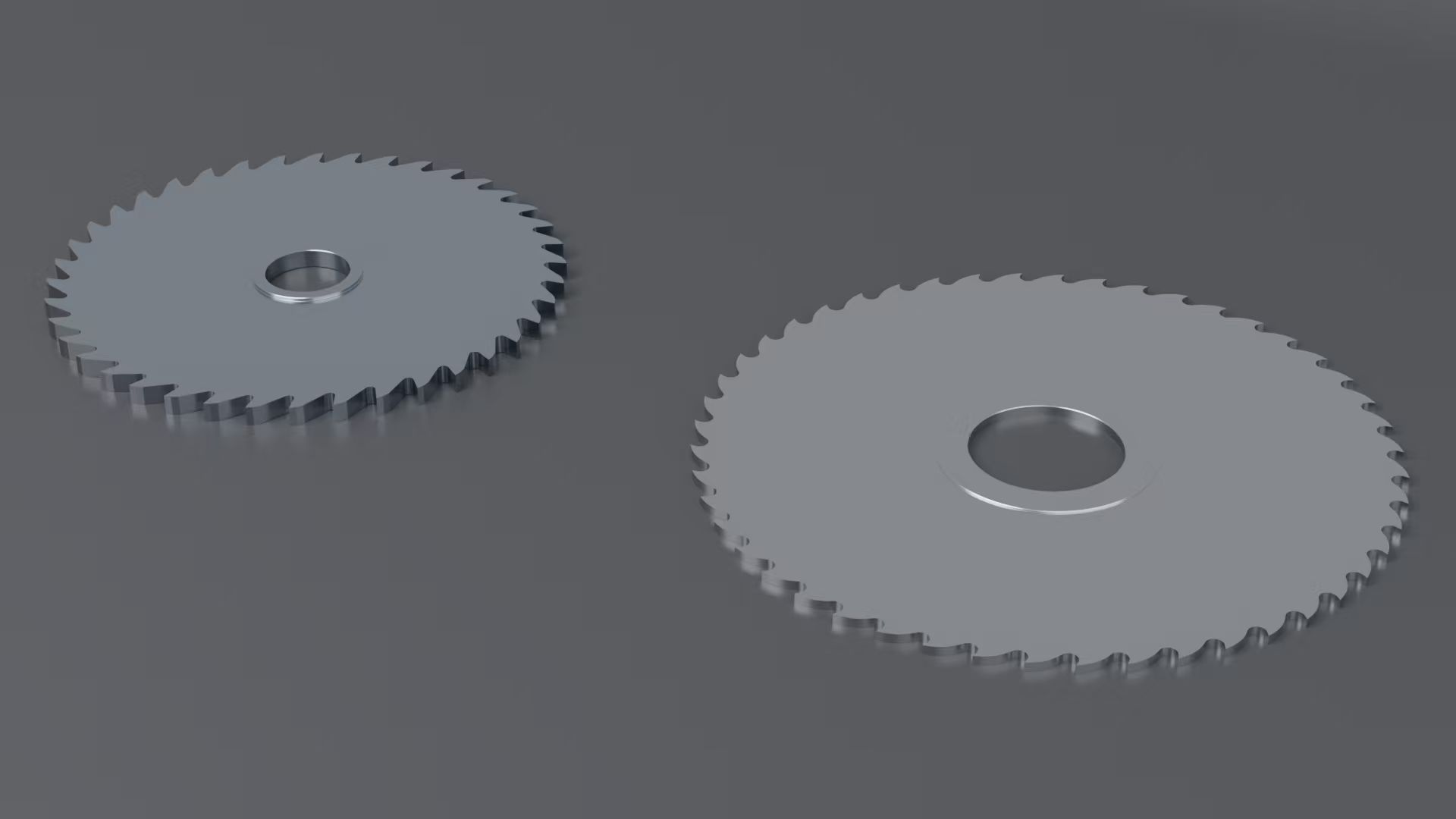
Coarse-grain or fine-grain solid carbide, 8–12% cobalt. All coatings — TiN, TiCN, TiAlN, AlCrN or uncoated — are available on this range too; the choice follows the material and how much heat the cut generates.
Specials: tooth forms B and W, saw sets, keyway bores, non-standard diameters and thicknesses, private-label packing. Standard sample orders from USD 200; special geometry quoted against lead time.
Tungstool Precision Technology (Shenzhen) · Cutting tools since 2002 · Exported to more than 20 countries · DHL door-to-door
06 — FAQ
Questions we get asked about this range
What makes extra-fine different from the fine pitch?
More teeth and a much lighter feed — 0.002–0.03 mm per tooth — so the cutting force stays low enough for thin walls and fragile parts.
Can it cut metal, or is it only for plastics?
It cuts metal, including thin-wall steel and stainless, but only in light sections. For deep slots in solid material the fine or coarse pitch is the right tool.
Why is the thickness tolerance tighter below 0.20 mm?
Thin blades deflect more easily, so a tight thickness tolerance is what keeps the slot width predictable. Below 0.20 mm we hold ±0.005 mm.
Will it fit my Swiss-type lathe?
The blade itself is standard; what matters is the arbor and the bore. Tell us the machine and the arbor you use and we will match bore and thickness.
What is the smallest size you grind?
8 mm diameter is the standard floor for this family. Below that we will quote it as a special if the geometry allows.
How fast can you ship, and how does it arrive?
Standard sizes leave within 5 working days of the order — often in 2–3. Specials depend on the drawing and process, so we confirm the date once the geometry is agreed. We ship DHL door-to-door as standard, with SF, UPS and sea or air options by region; China to the UK on a DDP basis is usually about a week.