Tungstool · Slitting saws
Solid Carbide Slitting Saws
Tungstool grinds solid carbide slitting saws for slotting, parting off and fine grooving — four families from 8 mm micro blades to 120 mm discs.
Standard products · Customized manufacturing · DIN 1837 and DIN 1838
01 — Saw types
Four Slitting Saw Families, One Grinding Source
Pick by slot depth first, then by the material you are cutting. Four families cover the range from 8 mm micro blades to 120 mm discs. The INOX tooth form for stainless is not a separate family — it belongs to the fine-pitch family and is described on that page.
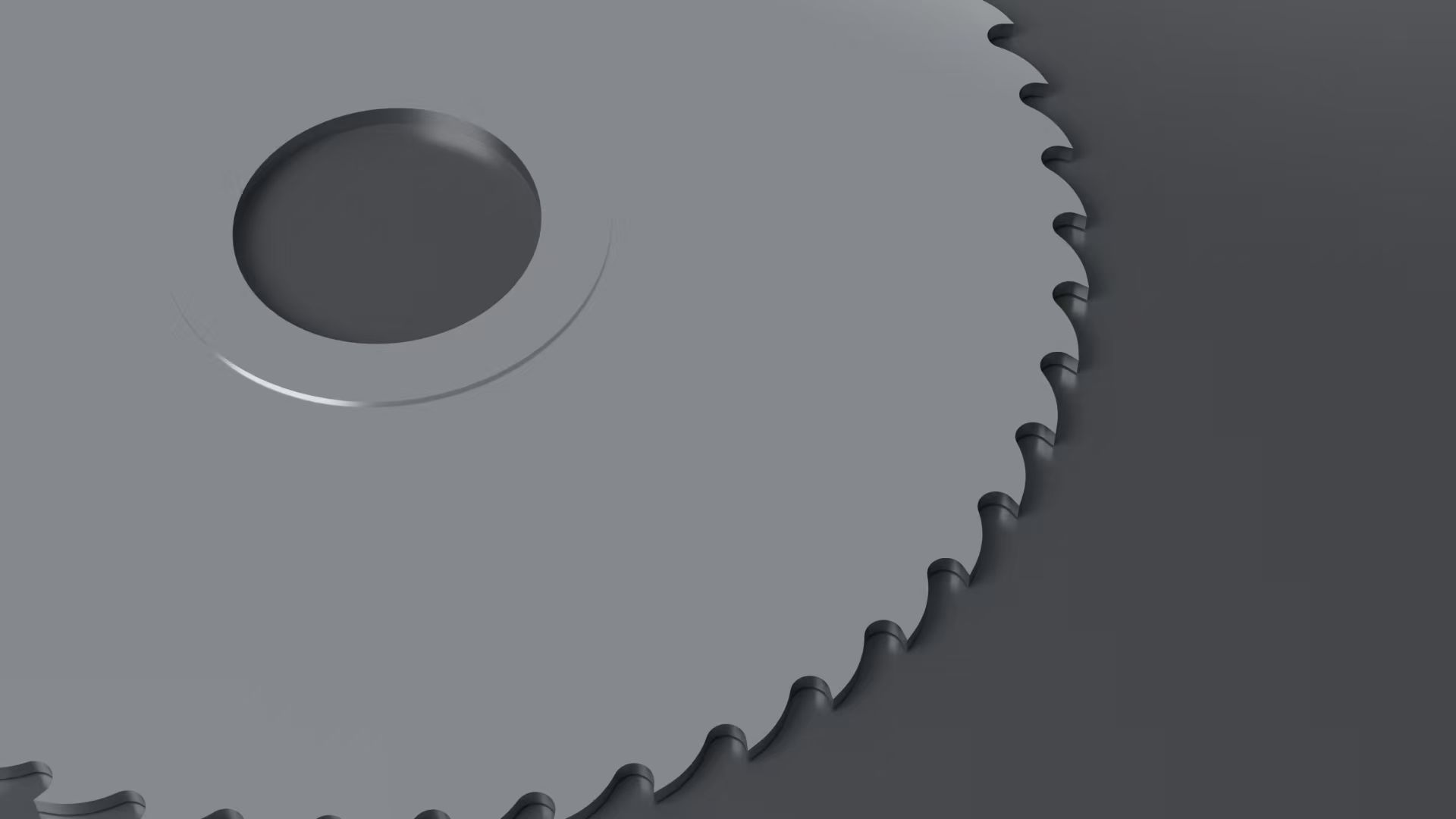
Fine Tooth (DIN 1837)
15–120 mm · 24–128 teeth · 0.10–6.00 mm
Shallow slots and short cuts in steel, cast iron and non-ferrous parts. The INOX tooth form for stainless sits inside this family — see the fine-pitch page.
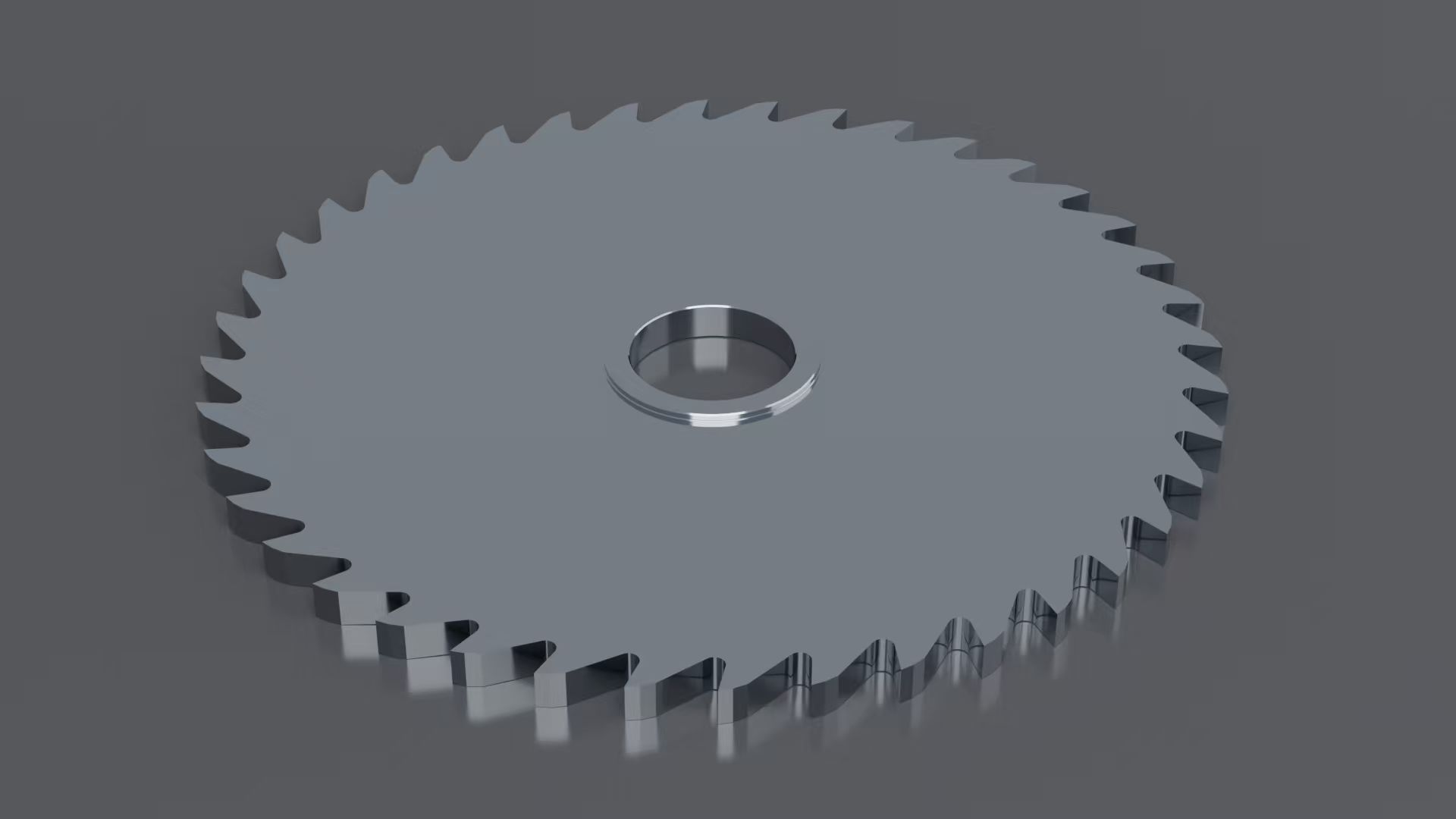
Coarse Tooth (DIN 1838)
15–120 mm · 20–80 teeth · 0.20–6.00 mm
Deep slots and long cuts where the gullets have to carry the chips away.
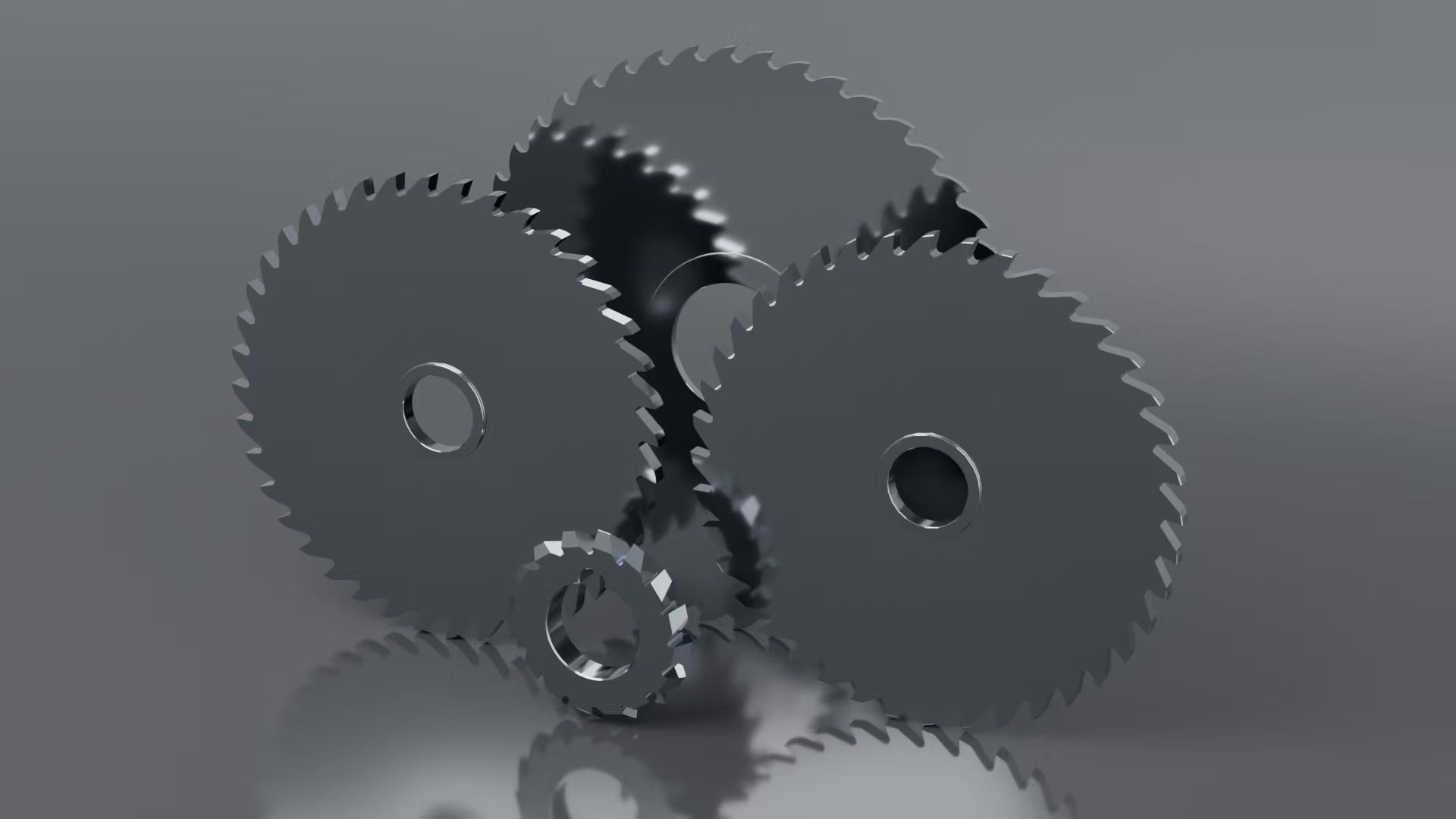
Extra-Fine Tooth
8–63 mm · 48–128 teeth · 0.10–3.00 mm
Thin-wall tube, fragile parts and automatic lathes at 0.002–0.03 mm/tooth.
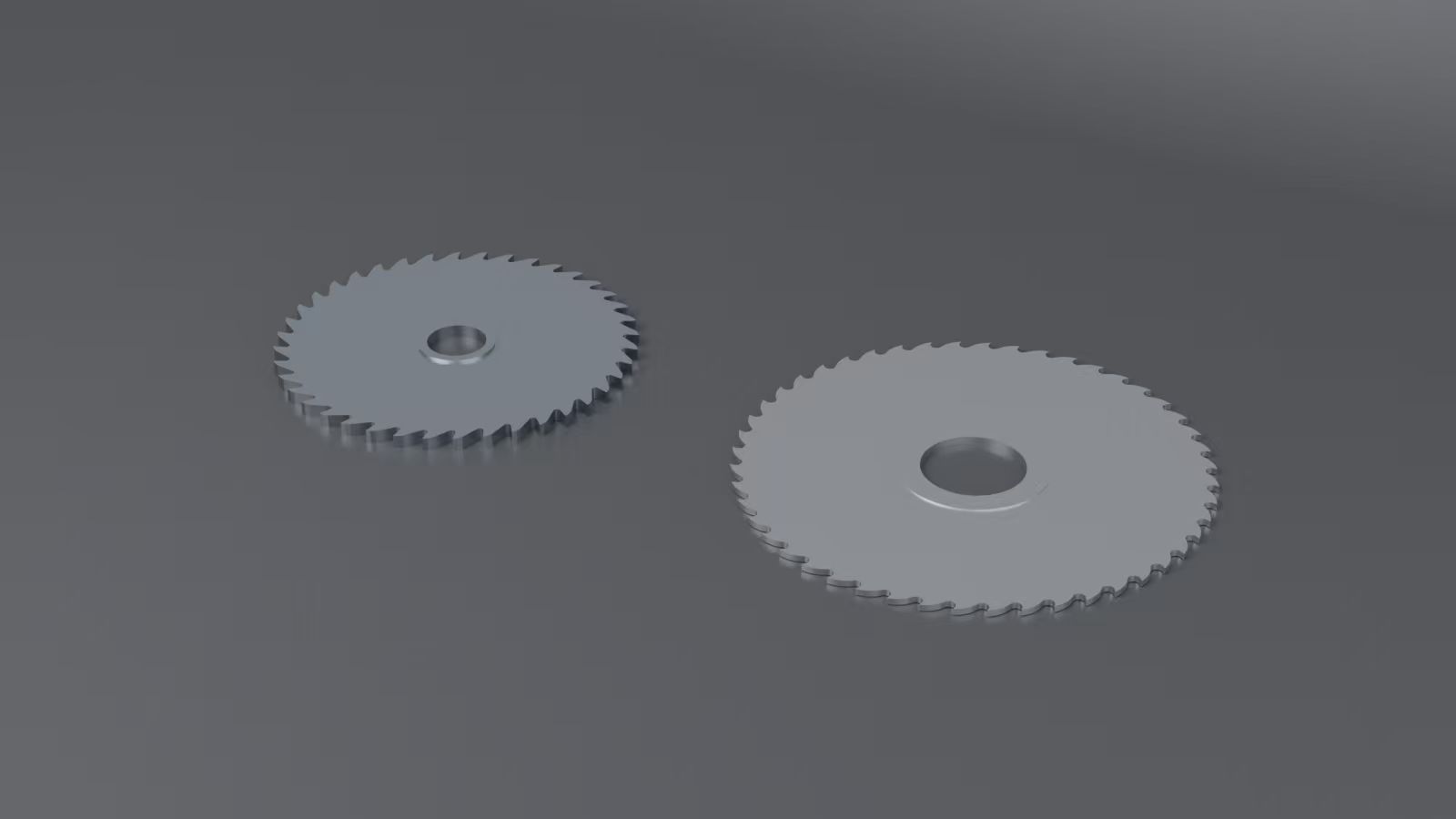
Fully Ground Blanks
8–35 and 40–120 mm · H7 bore
Faces ground, teeth left to you — for tool makers who grind their own form.
02 — The material being cut · ISO P K M N S H
Slitting Saw Selection by Material
Each ISO material group behaves differently on the cut. Below is what each one does to a blade, the coating that suits it and the carbide it runs on.
P
Steel
Free-cutting and alloy steels. Free-cutting grades break the chip short; alloyed grades work-harden and dull a sharp edge quickly.
Coating
TiAlN for dry cutting, TiCN when running wet.
Substrate
Fine-grain solid carbide.
Vc 120–240 m/min (free-cutting) · 40–200 (alloy, by hardness) · oil or emulsion
K
Cast iron
Grey, nodular and malleable irons. Graphite breaks the chip, but sand, scale and chilled spots abrade the edge.
Coating
TiCN or AlTiN for abrasive irons; uncoated for short runs.
Substrate
Wear-resistant fine-grain carbide.
Vc 60–120 m/min · dry or air blast; emulsion for finishing
M
Stainless steel
Austenitic, ferritic and martensitic stainless. The cut work-hardens — once the edge rubs instead of cutting, it fails fast.
Coating
TiCN or AlTiN; uncoated for gummy austenitic grades.
Substrate
Tough fine-grain carbide with a sharp edge.
Vc 50–100 m/min · oil or emulsion — never dry
N
Non-ferrous and plastics
Aluminium, copper, brass, bronze and thermoplastics. Aluminium builds up on the edge; brass and bronze are abrasive but free-cutting.
Coating
Uncoated or ZrN for aluminium; TiN for copper alloys.
Substrate
Polished solid carbide for chip flow.
Vc 150–600 (Al) · 80–300 (Cu) · 200–700 (plastics) · dry or air
S
Superalloys and titanium
Nickel- and cobalt-based superalloys, titanium alloys and alpha-beta grades. The heat stays in the cut.
Coating
AlTiN or AlCrN for heat resistance.
Substrate
Heat-resistant, tough fine-grain carbide.
Vc 25–60 m/min · high-pressure coolant
H
Hardened materials
Hardened steel and chilled cast iron above roughly 45 HRC. Any flex in the set-up shows up as chipping.
Coating
TiAlN.
Substrate
Hard, wear-resistant carbide with a light hone.
Low surface speed · cutting data on request for your hardness
Two rules that matter more than the chart: aim for two to three teeth in the cut at once, and never let the feed per tooth collapse — rubbing work-hardens stainless and burns plastics.
| Group | Material | Coating | Vc · m/min |
|---|---|---|---|
| P | Steel, free-cutting and alloy | TiAlN / TiCN | 40–240 |
| K | Cast iron | TiCN / AlTiN | 60–120 |
| M | Stainless and heat-resistant steel | TiCN / AlTiN | 50–100 |
| N | Aluminium, copper, brass, plastics | Uncoated / ZrN / TiN | 80–600 |
| S | Superalloys, titanium | AlTiN / AlCrN | 25–60 |
| H | Hardened steel >45 HRC | TiAlN | On request |
03 — Specifications
Dimensions and Tolerances: 8–120 mm
Standard sizes are held to DIN 1837 and DIN 1838. Dimensional inspection reports are available with your order, and special diameters, bores and thicknesses are ground to drawing.
| Family | D1 · mm | Bore H7 · mm | Thickness · mm | Teeth | Feed / tooth |
|---|---|---|---|---|---|
| Fine Tooth (DIN 1837) | 15–120 | 5–32 | 0.10–6.00 ±0.01 | 24–128 | 0.005–0.05 mm |
| Coarse Tooth (DIN 1838) | 15–120 | 5–32 | 0.20–6.00 ±0.01 | 20–80 | 0.01–0.1 mm |
| Extra-Fine Tooth | 8–63 | 3–16 | 0.10–3.00 ±0.005 / ±0.01 | 48–128 | 0.002–0.03 mm |
| INOX Tooth Form (in family 1) | 63–100 | 16–22 | 0.80–1.00 ±0.01 | 80–120 | 0.005–0.05 mm |
| Fully Ground Blanks | 8–120 (+0.15) | 3–32 | 0.10–6.00 ±0.01 | — | — |
04 — Custom builds and technical enquiry
Custom Slitting Saws and Technical Enquiry
Tooth forms B and W, saw sets on a common arbor, keyway bores, non-standard diameters and thicknesses, TiN / TiCN / TiAlN coatings, private-label packing — ground to your drawing, in small batches.
Tell us the material group, the slot depth and width, and the machine. A drawing or a photo of a worn blade usually answers three questions at once, and we quote from the print.
Tungstool Precision Technology (Shenzhen) · Cutting tools since 2002 · Exported to more than 30 countries · DHL door-to-door
05 — FAQ
Questions we get asked about this range
Which slitting saw do I need for my slot?
It depends on two things: how deep the slot goes and what you are cutting. If the depth stays under about a third of the blade diameter, start with the fine pitch; for deeper or longer cuts the coarse pitch clears the chips better. Send us the depth, width and material and we will point you to the right family.
Can you make a size that is not in the table?
Yes. Diameters, bores and thicknesses outside the standard range are ground to drawing, and we will tell you honestly whether the geometry is practical before you order.
Do you supply samples before a production order?
Yes — standard sample orders start at USD 200, and a dimensional inspection report can go with them so you can verify the blade before committing to a larger run.
What do you need from me to quote?
D1 and bore, thickness, tooth count if you have a preference, the material being cut, and the machine or set-up. A sketch, or a photo of the worn blade, is usually enough for us to quote.
How fast can you ship, and how does it get here?
Standard sizes leave within 5 working days of the order — often in 2–3. Specials depend on the drawing and process, so we confirm the date once the geometry is agreed. We ship DHL door-to-door as standard, with SF, UPS and sea or air options by region; China to the UK on a DDP basis is usually about a week.